
Jonathan Kuminga’s free agency finally has a real number attached to it, and the way that number landed says as much about his market as the figure itself.
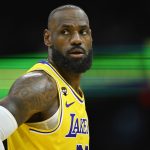
Speaking on The Stein Line’s Bleacher Report livestream from Las Vegas on Thursday night, Jake Fischer reported that the Los Angeles Lakers have made repeated offers to Kuminga built around a two-year deal worth about $20 million in total — and that the 23-year-old forward is holding out for far more.
By Friday morning, Fischer was back on X cleaning up how that report had been repeated, clarifying that Kuminga is seeking something “more in” the $25 million AAV ballpark relative to that Lakers offer — not more than $25 million per year, as several aggregators rendered it. He also noted Kuminga remains open to different deal structures depending on fit and role, and named the Cavs among the teams in that conversation.
The distinction between the two versions matters, and so does the fact that the correction was necessary at all. Kuminga is not asking teams to blow past the $24.3 million team option the Atlanta Hawks declined last week to make him an unrestricted free agent.
He is asking someone to roughly match it. In this particular summer, that may be just as impossible — and that impossibility is quietly the best thing the Cavaliers have going for them.
The number — and the correction nobody is running
The gap Fischer described is enormous in percentage terms. The Lakers’ standing framework works out to roughly $10 million per season.
Kuminga’s camp is anchored to the salary neighborhood he just left, having played last season on a deal that paid him a little more than $24 million, according to Heavy’s Sean Deveney, who reported the forward has no intention of moving backward on his pay scale.
Fischer himself sounded skeptical that the market will meet that anchor, telling Marc Stein on the same stream that he has a hard time seeing any team deliver that figure this summer. But the corrected framing changes the negotiation math.
A player demanding more than $25 million per year in July is unsignable. A player asking to stay near the option number he just lost — while signaling openness on structure and role — is a player whose price can bend toward the right situation.
A market with no money
The reason the price has to bend is that the money simply is not out there. Stein was blunt about the state of the league’s books on the livestream.
“There’s no cap space left anywhere, really,” Stein said.
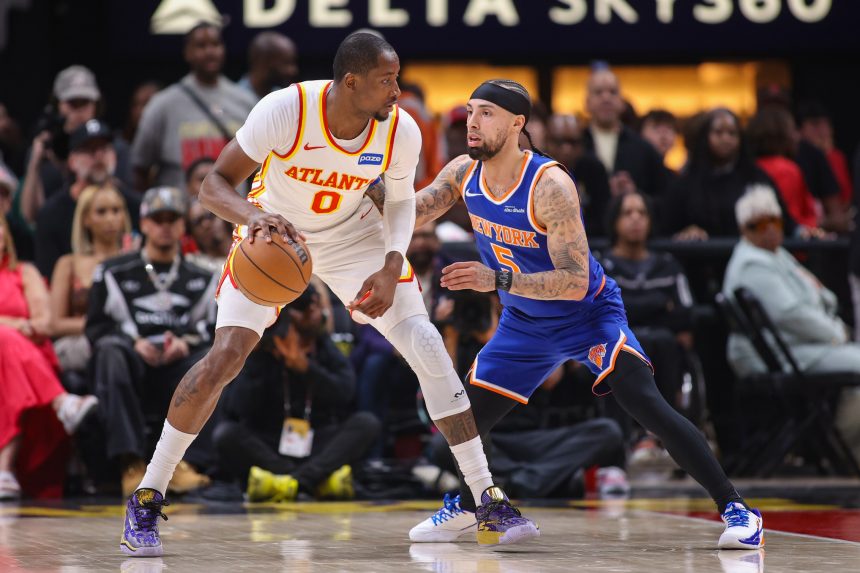
That reality jams up every path in front of Kuminga. The Lakers, the most aggressive suitor, no longer have the room to sign him outright after an offseason of additions around Luka Doncic, which makes a sign-and-trade with Atlanta their only realistic route — and Fischer voiced real doubt on the stream about how willing the Hawks are to cooperate with Los Angeles specifically.
Milwaukee, the one team Fischer and Stein have previously tied to meaningful flexibility for Kuminga, is coming off trading Giannis Antetokounmpo and rebuilding its identity on the fly, a strange landing spot for a 23-year-old chasing both money and a defined role.
So the standoff holds. Kuminga will not take $10 million per year, nobody can hand him $25 million, and each week that passes shrinks the pool of exceptions and roster spots around the league.
Stalled markets do not stay stalled forever, though. They break toward whichever team’s constraints loosen first — and that is where Cleveland re-enters the picture.
Where Cleveland actually stands
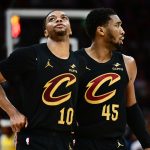
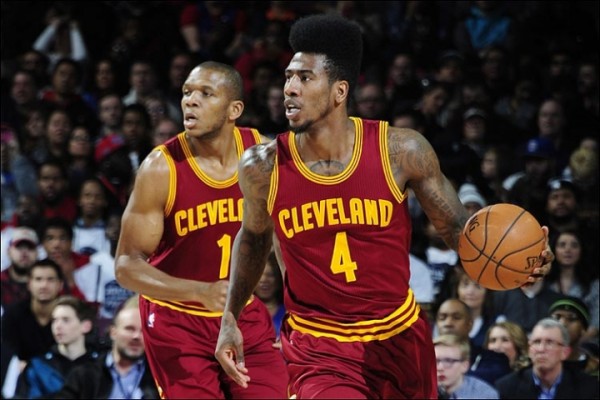
The Cavaliers’ interest in Kuminga is not new. Cleveland has hovered around his market since the Hawks declined his option, driven in part by Kenny Atkinson’s relationship with the forward from their shared Golden State years — the throughline of Cleveland’s early presence in his free agency.
What is new is the reporting on Cleveland’s mechanism for actually doing something about it. Deveney reported Friday that the Cavaliers are confident deals for Max Strus, Dennis Schroder or both will be there once LeBron James makes his decision, with the open question being how much draft capital Cleveland attaches.
The inventory is workable if unspectacular: The Cavs control their own first-round picks in 2031 and 2033, can offer swaps in the 2030-to-2033 window and do not have a tradable second-rounder until Sacramento’s incoming 2032 selection. Strus is owed $16 million on an expiring deal, Schroder $14.6 million, and Deveney named the Charlotte Hornets as one possible Strus destination.
“He would be sacrificed to get LeBron James in,” Deveney wrote of Strus.
That sentence doubles as the honest framing of Cleveland’s whole summer. Every shedding scenario was built to duck the second apron and clear a lane for James, the math laid out in the price of signing LeBron James.
But the same machinery serves a Kuminga pursuit if the James chase dies. To be clear about the ceiling: Even after moving Strus and Schroder, Cleveland cannot get anywhere near $25 million per year for an outside free agent, and acquiring Kuminga by sign-and-trade would hard-cap the Cavs at the first apron — likely a non-starter for a payroll already carrying Donovan Mitchell’s record-setting $273 million extension.
If Kuminga’s price holds at his ask, Cleveland is out, full stop. The bet is that it will not hold. If the market forces Kuminga to choose between modest one-year or two-year money everywhere he looks, dollars stop deciding the race and situation starts to.
A coach who knows him, a contender with a genuine starting-caliber hole on the wing and a front office that will suddenly have midlevel-range flexibility the moment its LeBron answer arrives is a much stronger pitch at $8 million than it is at $25 million.
The player worth waiting on
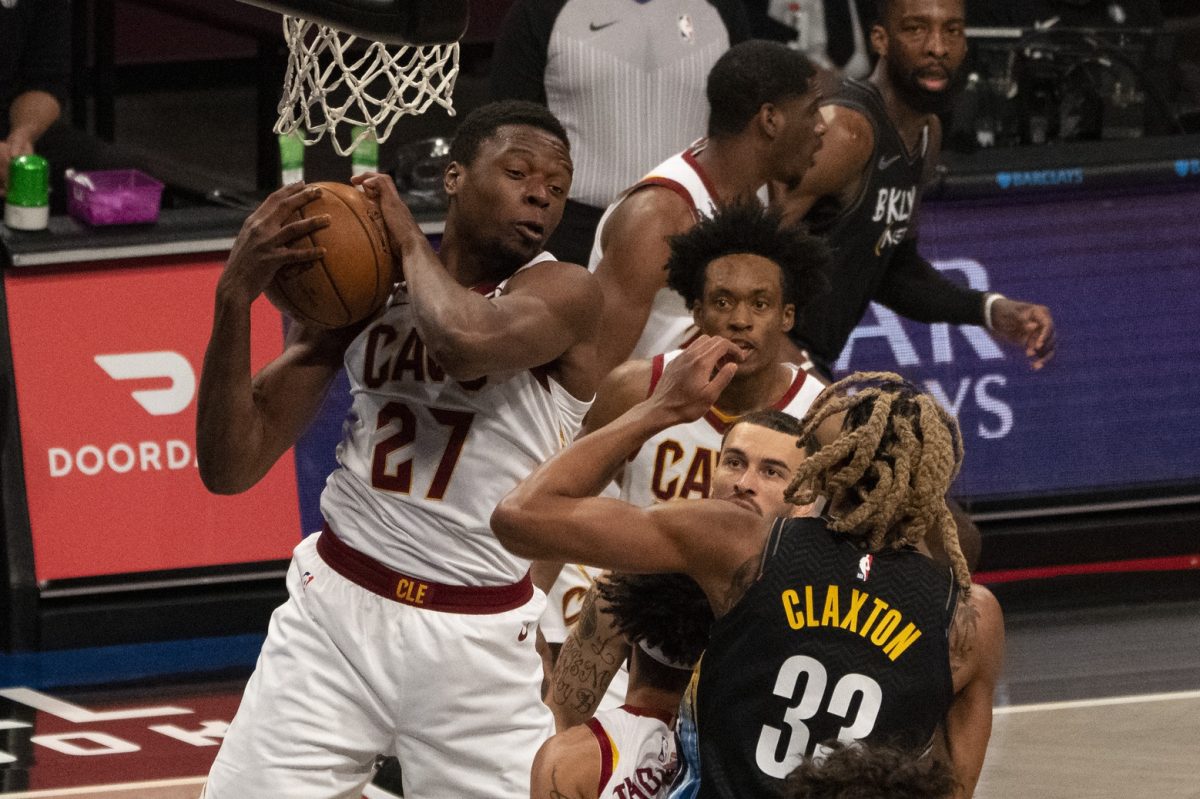
Cleveland’s roster case has not changed since the Eastern Conference Finals ended. The Cavaliers were swept by the eventual-champion New York Knicks in a series that exposed the lack of a big, athletic forward who could hold up physically on the perimeter, and that need shapes every frontcourt question the team is facing this offseason.
Kuminga fits the archetype precisely. The 6-foot-7 forward averaged 12.2 points, 5.6 rebounds and 2.3 assists per game across 36 games split between Golden State and Atlanta last season, shooting 46.3 percent from the field and 33.3 percent from 3-point range.
He was better after the trade, putting up 12.3 points per game on 47.6 percent shooting for the Hawks, and he does not turn 24 until October. The warts are equally documented: His jumper abandoned him against the Knicks in the first round, where he scored 13.7 points per game across six playoff contests but shot just 5-of-24 from deep.
He is a bet on the frame and the age, not a finished product — which is exactly the kind of bet a capped-out contender gets to make when the market misprices a 23-year-old.
What to watch next
Everything now runs through the same bottleneck: James. If he chooses Cleveland, the Strus and Schroder money goes to that pursuit and Kuminga signs elsewhere, likely for less than he wants.
If James goes to Miami, Philadelphia or anywhere else, the Cavaliers become the rare team with sudden, deliberate flexibility, a coach Kuminga trusts and a defined starting-wing vacancy — arriving at exactly the moment a stalled market starts forcing decisions.
Fischer’s correction did not change Kuminga’s price; it clarified it. And a clarified, unmeetable price in a league with no cap space is not a bidding war. It is a waiting game — the one game Cleveland was already forced to play.