
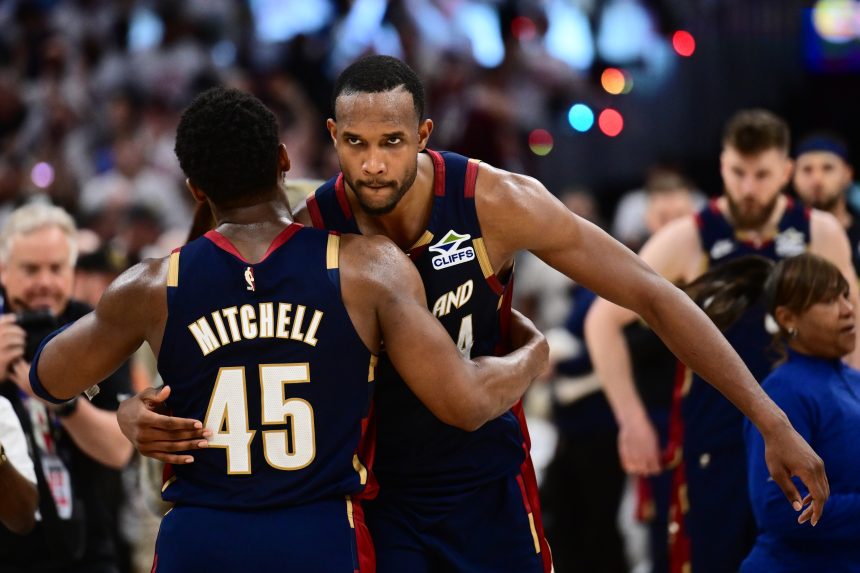
Donovan Mitchell did the predictable thing on the first day he was allowed to, and it still managed to reshape everything around him.
Cleveland’s All-NBA guard agreed to a four-year, $273 million maximum extension on Tuesday, ESPN’s Shams Charania reported, a deal that runs through his age-34 season and carries both a player option for 2030-31 and a full trade kicker.
He put pen to paper on the very first day he was eligible, walking away from the chance to wait a year and chase a fifth season worth roughly $80 million more. For a fan base that spent two summers bracing for star-guard uncertainty, the message was clean.
That was the easy part. The extension made Mitchell the highest-paid player in the league by average salary and erased the one storyline that could have shadowed the entire season. What it did not do is settle what kind of roster Cleveland is building, and in some ways it made that question louder.
With Mitchell anchored to the top of the payroll through the end of the decade, the front office now has to decide whether every piece of the current core still fits — and the name that keeps surfacing is Evan Mobley.
Why Donovan Mitchell’s Extension Changes the Cavaliers’ Math
The figure that matters isn’t $273 million; it’s the slice of the salary cap the deal consumes. Mitchell’s new money is projected to open above $60 million in 2027-28 and build toward a player option worth around $75 million in its final year, which means he will eat roughly 35 percent of Cleveland’s cap for the foreseeable future, as Forbes’ Bryan Toporek detailed.
Mobley already sits on a 30 percent max of his own, and Jarrett Allen absorbs close to another fifth of the cap over the next three seasons. Layer in the new deal James Harden is expected to sign, and the Cavaliers are tied to one of the most top-heavy cores in the sport.
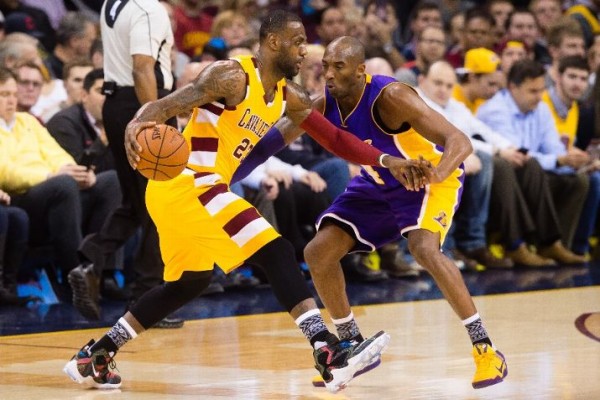
There is one wrinkle worth clearing up for anyone doing napkin math on a LeBron James pursuit: Mitchell’s extension does nothing to the money Cleveland can offer James this summer.
The Cavaliers are operating over the cap and into the tax aprons no matter what, so any James signing would come through an exception or the minimum rather than space the extension somehow swallowed. The two pursuits run on separate tracks.
The real constraint is the second apron, the punitive ceiling in the current collective bargaining agreement that functions as a near-hard cap. Teams that live above it lose the tools most rosters use to improve — the ability to aggregate salaries in trades, access to the full mid-level exception, flexibility with future picks.
The more of the cap a team pours into a handful of stars, the fewer avenues it has to build out the supporting cast around them. That is the box Cleveland is now negotiating, and it is why the extension quickly became less a story about Mitchell than about everyone else on the books.
The Evan Mobley Question the Cavaliers Can’t Avoid
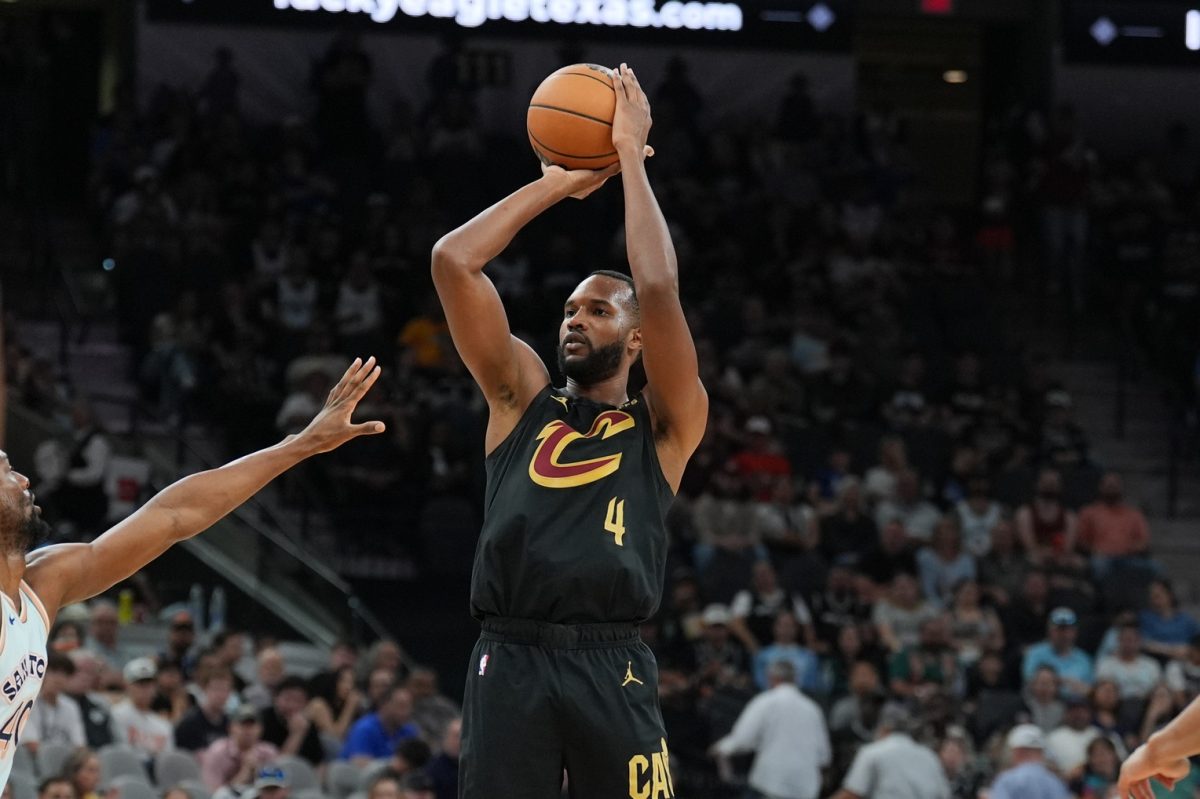
Within hours of the news, the league conversation had already moved to Mobley. Heavy’s Sean Deveney framed the dilemma directly: Committing to Mitchell raises the question of whether Cleveland has fully embraced a win-now posture, and whether that makes Mobley — whose maximum extension escalated to 30 percent of the cap and still owes him about $223 million over four years — the most logical piece to move for cheaper, more plentiful help.
The reasoning is uncomfortable but internally consistent. Trading Mobley would ease a long-term financial picture that only tightened with the Mitchell deal, and it would return the kind of rotation depth a top-heavy roster perpetually lacks.
Deveney also pointed to a basketball overlap that a James signing would only worsen: a 41-year-old James needs the ball and shots, and the player whose role would likely compress most is the young frontcourt star still working to expand his offensive game. On a roster already carrying Allen as a traditional center, a redundancy argument writes itself.
None of that is a report that a trade is in motion. It is analysis of the squeeze the extension created, and it is worth treating as exactly that.
What Cleveland Has Actually Said About Evan Mobley
The counterweight is significant, and it starts with who Mobley is. He is a 25-year-old, homegrown Defensive Player of the Year, the youngest and highest-upside member of the core, and the exact profile of player contenders build around rather than trade away.
Cleveland has consistently signaled it views him as a long-term pillar, and it declined to dangle him as a centerpiece even when this summer’s biggest names hit the market.
Allen is the likelier trade chip if the Cavaliers make a move — a frontcourt piece that returns relief and a contributor without gutting the team’s defensive ceiling. That squares with how Cleveland has already been operating. Moving Mobley would be the far more drastic pivot, the kind a front office makes only if it has decided the current construction has a hard ceiling.
How LeBron James Raises the Stakes for the Cavaliers
Every branch of this leads back to James. Mitchell would embrace a reunion, and the Cavaliers sit among the leading suitors alongside Miami, Golden State, Philadelphia and Minnesota, with Charania describing Cleveland near the top of James’ hierarchy of contenders. That interest is precisely what accelerates the win-now clock — and what a 41-year-old James would demand also happens to be what the roster most struggles to provide.
The fit skepticism is real, and it is why the front office has been working the margins. Analysts have questioned whether a Mitchell-Harden-James backcourt generates enough spacing and off-ball movement, and whether the Mobley-Allen frontcourt stretches the floor enough to matter in May.
Cleveland has explored moving Max Strus and Dennis Schröder specifically to duck the second apron and open a usable exception. Each of those moves is about clearing the runway for a James addition — and each is a reminder that the Cavaliers cannot simply add without subtracting.
The Bottom Line for the Cavs
Mitchell’s extension was the right call and an easy one to defend. Letting his future hang over a contending season would have invited chaos, and Cleveland has consistently good, playoff-tested talent it would have been foolish to risk for nothing.
But the deal also locked the team into a math problem it now has to solve in real time. The 2026-27 season looms as a genuine referendum, and the roster the Cavaliers take into it may not look like the one that just reached the conference finals.
If James signs and the group finally breaks through, the questions about the core’s cost disappear. If he lands elsewhere, or if another second-round exit follows, the pressure that has quietly gathered around Mobley becomes the defining storyline of Cleveland’s winter.
Mitchell got his security. What the Cavaliers do with the rest of the bill is the story that starts now.