
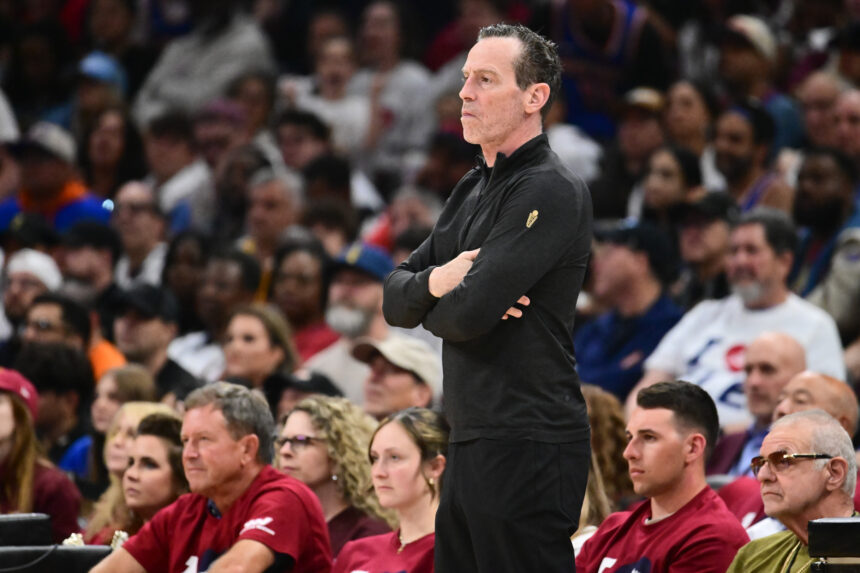
Kenny Atkinson is bringing a familiar playoff frustration into the Cleveland Cavaliers’ preparations for a new season.
With camp underway in Spain, the coach is examining how Cleveland can handle pressure more consistently after needing seven games to advance through each of the first two rounds last spring. His concern includes his own preparation of the team.
“I want to make us a mentally more resilient team,” Atkinson said. “I think our skill level’s good. I love our system. I love what we do. But keep on working on the mental performance side — how to push these guys a little more mentally, get them out of their comfort zone, be more adaptable, more flexible. That’s been a philosophy.”
Atkinson also returned to a question about those missed closeout opportunities: “How could I have prepared them better mentally and physically?”
That reflection gives Cleveland’s camp a purpose beyond settling on a starting lineup. The Cavs have already demonstrated that they can survive an elimination game.
The next challenge is to avoid repeatedly needing one when they have a chance to finish a series earlier.
Atkinson’s Game 6 concern predates training camp
This is an issue Atkinson raised immediately after Cleveland’s season ended, which makes the connection between May and October significant.
Atkinson pointed to the extra games against Toronto and Detroit when discussing the difficulties Cleveland encountered against New York. He acknowledged that finishing those series sooner would not necessarily have changed the winner of the conference finals.
“And that’s not to say, ‘Oh, we win those games, we beat the Knicks,'” Atkinson said then.
The distinction matters. Cleveland cannot establish that extra rest would have solved its problems against New York, and the coach’s comments do not provide evidence for that conclusion. They identify an opportunity the Cavaliers failed to take before reaching the next opponent.
That also makes this a more specific coaching challenge than asking players to become tougher. A team cannot control how well its next opponent plays, but it can examine how it handles the opportunities already in front of it.
Toronto showed how narrow the margin could be
Cleveland’s first missed closeout opportunity came in a 112-110 overtime loss at Toronto on May 1. The official NBA score sheet illustrates both the fight required to extend that game and the mistakes that left the Cavaliers vulnerable.
The Cavs trailed 92-81 after three quarters, then outscored the Raptors 23-12 in the fourth. Evan Mobley finished with 26 points and 14 rebounds, while James Harden played 44 minutes.
Yet Cleveland committed 18 turnovers and made 19 of 27 free throws. Toronto scored 25 points off those turnovers, adding a significant return on possessions the Cavaliers failed to complete.
Those numbers help explain why the game belongs in a discussion about preparation. The fourth-quarter recovery offered evidence of resistance under pressure, but Cleveland still left points and possessions available in a contest decided by two.
A box score cannot assign a psychological explanation to a missed free throw or a turnover. It can, however, show where a close game became more difficult to win.
That is the useful starting point for reviewing execution without turning every error into a judgment about a player’s character.
Detroit exposed a different closeout problem
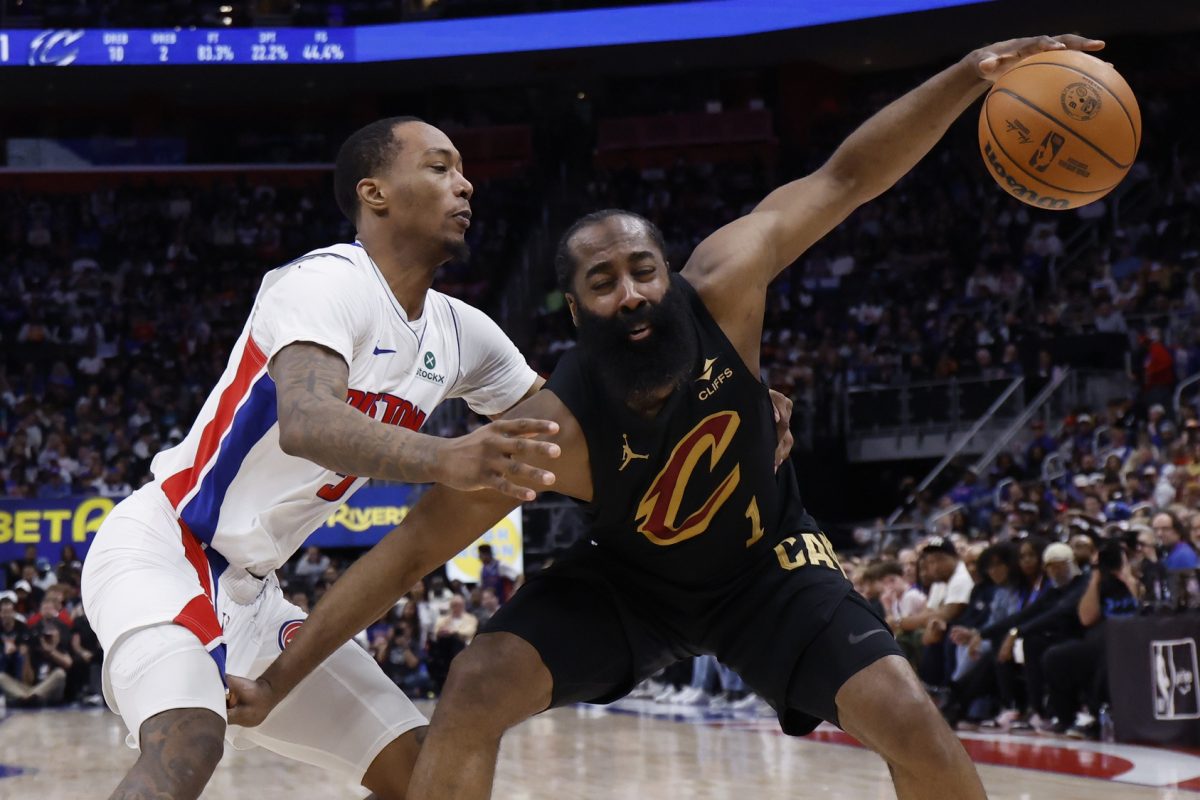
Two weeks later, the Cavaliers had another chance to end a series, this time at home. The official report from Detroit’s 115-94 Game 6 victory on May 15 shows a game that deteriorated after halftime.
Cleveland was down 54-51 at the break. Detroit then won the third quarter 30-19 and the fourth 31-24, turning a three-point advantage into a comfortable finish.
The Cavaliers recorded 15 assists against 20 turnovers, with the Pistons scoring 28 points off those giveaways. Donovan Mitchell shot 6-for-20, and Harden committed eight turnovers.
The issue in that game was broader than a single late possession. Cleveland needed to prevent a manageable deficit from growing while its offense struggled to produce clean, completed trips.
Taken together, the two Game 6 losses call for different kinds of review. Toronto involved a comeback followed by a narrow overtime defeat. Detroit involved a competitive first half followed by a sustained second-half separation.
Treating both as the same failure would make the lesson less useful. The staff has to distinguish between decisions, execution and the opponent’s success before deciding which habits need the most work.
The Game 7 response belongs in the evaluation, too
The next game against Detroit complicates any suggestion that Cleveland simply could not handle pressure. On May 17, the Cavaliers won Game 7 on the road, 125-94.
Mitchell had 26 points and eight assists without a turnover. Sam Merrill scored 23 points and made five of his eight 3-point attempts. Cleveland finished with 31 assists.
Harden scored nine points on 2-for-10 shooting, yet the Cavaliers still won comfortably. His individual scoring struggles did not prevent the group from finding enough offense elsewhere.
That provides a useful contrast with Game 6. Cleveland already had evidence that it could deliver a connected performance in a decisive game.
The coaching task is to make that level of execution more dependable before circumstances become an elimination test.
Winning Game 7 deserves to remain part of the assessment. So does asking why the Cavaliers could not close the series two nights earlier.
Those questions can coexist without dismissing either the achievement or the missed opportunity.
Friday’s practice gave the message a basketball application
Friday’s session included work on inbound situations, offensive sets and defensive scenarios. Those assignments give the broader resilience goal practical detail.
An inbound possession, for example, tests whether players recognize the defense and know their alternatives when the intended receiver is covered. A defensive walkthrough can clarify who communicates a switch and who protects the basket when the first matchup changes.
Those are examples of what situational preparation can address, rather than additional drills Atkinson has publicly announced. Their value lies in making the response clearer before a game becomes frantic.
Practice also gives coaches a place to examine their own instructions. If players repeatedly arrive at different answers to the same situation, the solution may involve simplifying the assignment or improving communication.
That is why Atkinson’s inclusion of himself in the review matters. Better preparation requires evaluating what the staff teaches and how clearly players can apply it.
Rotation decisions will shape how the lessons carry over
Cleveland still has personnel questions to resolve. Atkinson said Sept. 25 that the starting lineup remained undecided and that he could make a case for giving 13 players rotation minutes.
#Cavs Kenny Atkinson: "The starting lineup is not set. We have a whole training camp to work through that." Also said he sees 13 guys who he could justify giving rotational minutes to this coming season.
— Chris Fedor (@ChrisFedor) September 25, 2026
As Cavaliers Nation previously covered, that leaves decisions about both the opening group and the distribution of minutes afterward.
For the closeout discussion, the relevant question is which combinations can function when a possession becomes difficult. A coach may need a reliable inbound receiver, another decision-maker against pressure or a group that can defend without giving away an easy mismatch.
Those needs can change with the opponent and the score. Camp offers a chance to establish which players understand each assignment before substitutions carry postseason consequences.
Cleveland’s announced camp itinerary includes an Oct. 4 scrimmage in Malaga, followed by the preseason opener against Boston on Oct. 8. Those sessions can help assess communication and execution, even though they cannot reproduce a playoff closeout game.
Atkinson has carried the question from last spring into this fall. The meaningful progress will come when Cleveland can turn a chance to finish a series into an actual finish, with fewer possessions left to revisit afterward.