
The Cleveland Cavaliers finally made their first meaningful move of the post-LeBron James era on Sunday, and it may have answered a bigger question than the one it was designed to solve.
Hours after James’ contract with the Philadelphia 76ers became official the Cavaliers agreed to terms with a very different kind of forward. EuroLeague standout Mario Hezonja has agreed to a one-year, $2.8 million deal with Cleveland, while both the Cavs and Golden State Warriors had pursued the 31-year-old.
On its face, this is a modest depth signing. Read alongside everything else that happened Sunday afternoon, it looks more like a fork in the road — because within minutes of the Hezonja news, the league’s read on Cleveland’s other big wing pursuit changed completely.
The deal, and the player Cleveland is getting
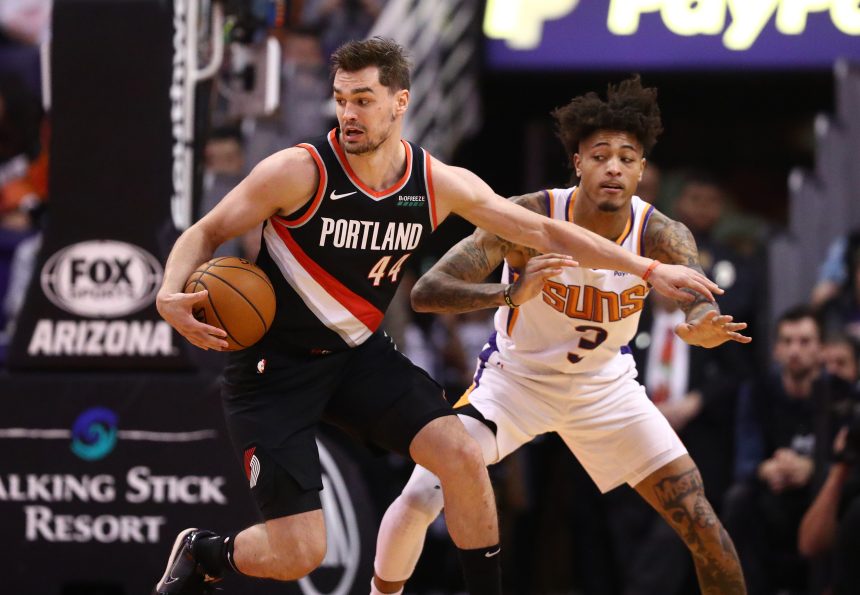
Hezonja arrives with one of the stranger resumes a Cavaliers free agent addition has carried in years. The Orlando Magic drafted him No. 5 overall in 2015, and across five NBA seasons with the Magic, New York Knicks and Portland Trail Blazers, he averaged 6.9 points, 3.1 rebounds and 1.3 assists per game over 330 appearances, per Basketball-Reference, which lists him at 6-foot-8 and 220 pounds.
He last played in the league in the 2019-20 season. The player Cleveland just signed is not the one who washed out of Portland. Hezonja spent the last four seasons with Real Madrid, where he helped the club to a EuroLeague championship and was named the Spanish ACB’s Most Valuable Player for the 2025-26 season.
He put up 17.5 points and 4.9 rebounds per game in Spain this past season. For a team that reached the Eastern Conference finals last season and watched its forward rotation thin out all summer, a decorated European wing at a minimum-level price is a sensible flier on its own terms.
The Cavaliers had been circling this outcome for days. Marc Stein and Jake Fischer grouped Hezonja with Jonathan Kuminga on Cleveland’s list of fallback options last week, with the entire pursuit frozen until James made his call. James made it Friday, and the front office moved inside 48 hours.
The Kuminga signal hiding in a minimum-level move
Here is where the signing stops being a footnote. Two minutes after Charania’s report, Brett Siegel posted that Hezonja’s move to Cleveland “leaves one suitor for Jonathan Kuminga: The Los Angeles Lakers,” adding that he expects a sign-and-trade with the Atlanta Hawks built around Jarred Vanderbilt to get done.
With Hezonja heading to Cleveland, that leaves one suitor for Jonathan Kuminga:
The Los Angeles Lakers.
I would expect a sign-and-trade involving Jarred Vanderbilt to be completed there with the Hawks. https://t.co/PF9rexqNRh
— Brett Siegel (@BrettSiegelNBA) July 26, 2026
That is a striking conclusion given where things stood two days ago. On Friday, immediately after James chose Philadelphia, The Athletic’s Joe Vardon reported that the Cavaliers and Kuminga had mutual interest. The connection was never speculative.
Fedor said on Cleveland.com’s “Wine and Gold Talk” podcast last week that Kuminga represented Cleveland’s contingency if James went elsewhere.
“I do think that that is their backup plan,” Fedor said, per the podcast.
So the team that spent the week positioned as Kuminga’s most serious alternative destination just spent its first post-LeBron move on a different forward entirely. Around the league, that reads less like patience and more like a decision.
The money explains the choice
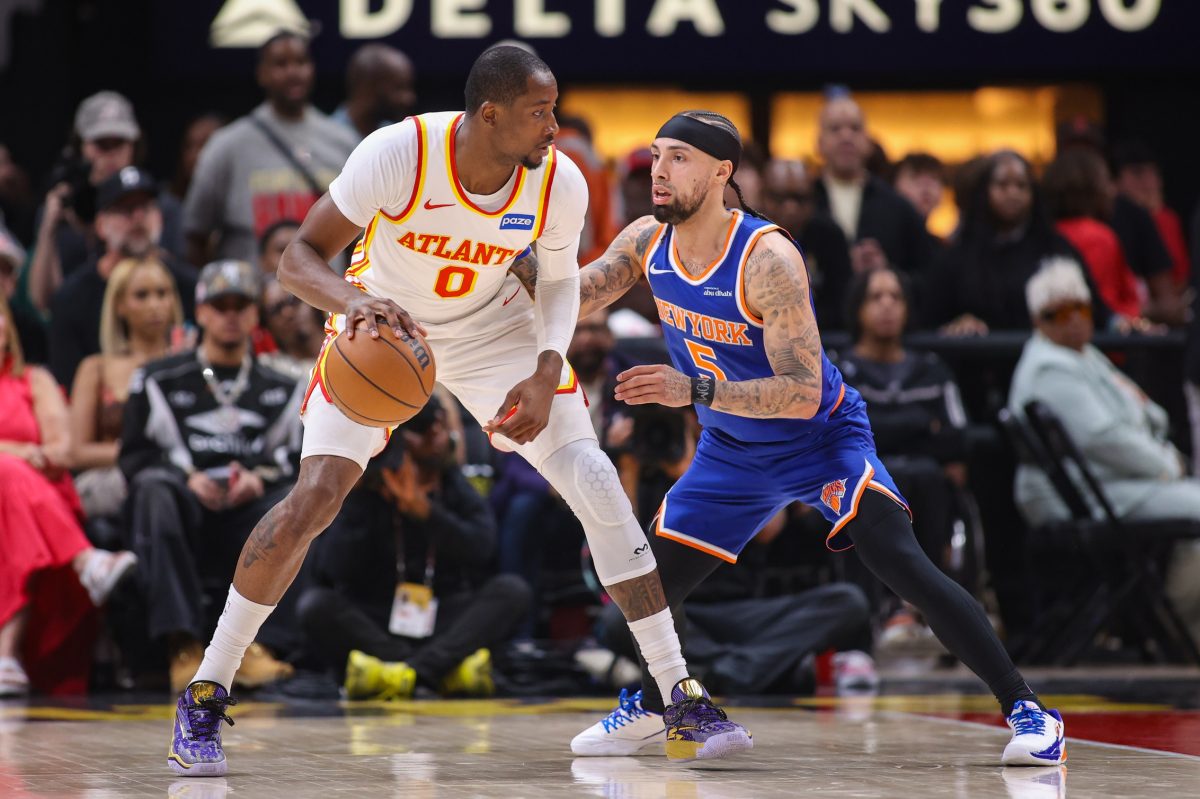
The logic is not hard to reconstruct. Kuminga, 23, is reportedly seeking a deal in the range of $15 million to $20 million per season, and any team paying him beyond minimum money would need Atlanta’s cooperation on a sign-and-trade, since the Hawks retained his Bird rights after acquiring him from Golden State at last season’s trade deadline.
Cleveland’s books were never built for that kind of outlay. The payroll is dominated by Donovan Mitchell’s max extension alongside the money committed to Evan Mobley, Jarrett Allen and James Harden. Paying Kuminga market rate would have required sending real salary back out of a rotation Cleveland wants intact, and it would have deepened an apron squeeze the front office has been managing all offseason.
Hezonja costs $2.8 million, requires no trade machinery and fills the same positional need, if not the same ceiling. That last distinction matters, and nobody in Cleveland should pretend otherwise.
Hezonja is a 31-year-old betting on a comeback; Kuminga is a 23-year-old former lottery pick entering his prime. The Cavaliers did not sign a comparable player. They signed an affordable one.
Is the door actually closed?
The honest answer is: mostly, but not provably. Hezonja’s arrival does not outright eliminate Cleveland from the Kuminga market but sharply reduces the urgency to spend at his asking price.
Vardon’s mutual-interest reporting is only two days old, and front offices have reversed course on less. If Atlanta’s sign-and-trade talks with the Lakers stall — Los Angeles has been reluctant to attach meaningful draft capital — Cleveland could theoretically re-enter at a number closer to its comfort zone.
But every visible signal now points one direction. Siegel expects the Lakers deal to get done.
The Cavaliers used their cleanest roster spot on Hezonja. And a front office that just watched LeBron James walk to Philadelphia chose certainty at $2.8 million over a bidding war it was never structured to win.
For a fan base processing a second straight weekend of hard news, there is a version of this that ages well. If the ACB’s reigning MVP translates even most of his European game, Cleveland added a legitimate rotation wing for less than 2 percent of what Kuminga reportedly wants annually, and it kept its trade chips for the season.
If he doesn’t translate, the Cavs spent a minimum-level deal to find out — and the Kuminga what-if becomes one more entry in an offseason ledger this front office will be answering for all year.
Either way, the first move of the post-LeBron era is on the books. It tells us more about the next twelve months than its price tag suggests.