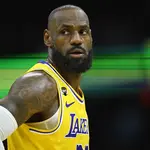

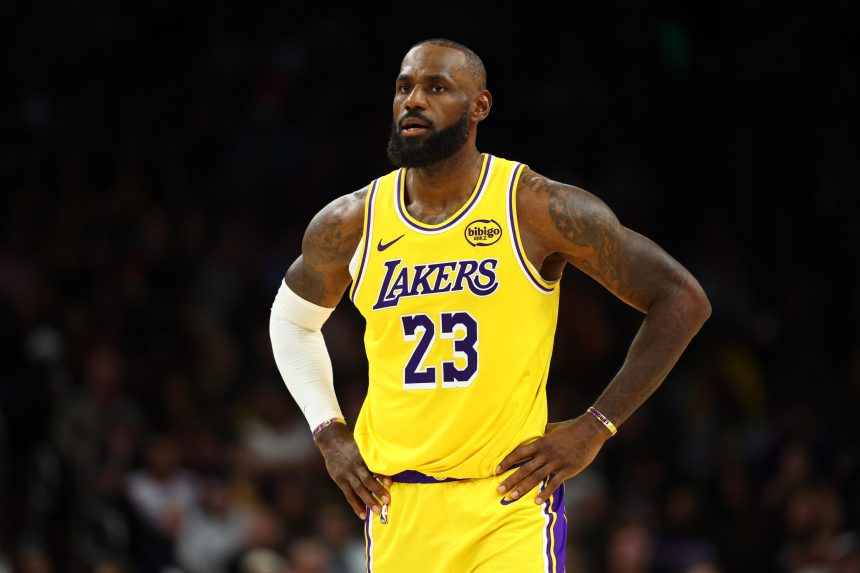
A day after Rich Paul’s whiteboard had Cleveland Cavaliers fans dreaming, LeBron James’ agent poured a measure of cold water on the whole process — and the report that carried his words included two developments the Cavaliers won’t love.
Paul told Forbes’ Mark Medina in a story published Saturday that the four-time NBA MVP’s fourth free-agency decision is nowhere near the finish line.
Rich Paul says a LeBron decision isn’t close
“I don’t think this happens anytime soon,” Paul told Medina.
Asked whether teams should brace for a weeks-long wait rather than a days-long one, Paul didn’t soften the message.
“I don’t think it’ll be the next few days,” Paul said.
The agent framed the deliberate pace as a feature of this decision, not a bug, drawing a line between this summer and the two most famous choices of James’ career.
“This is the first time he’s making a decision that is truly for him. There is no pressure,” Paul said. “When he left Cleveland [in 2010 for Miami], he had to win a ring. When he came back [in 2014], he had to deliver on the promise. This is at this stage where he can decide what he wants to do and how he wants to do it.”
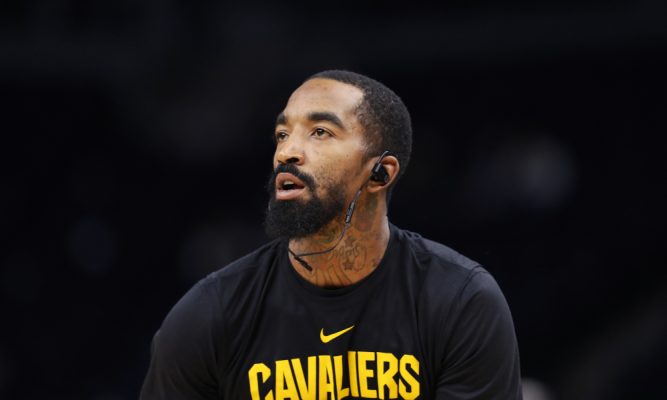
In the meantime, the 41-year-old has been on vacation and on the golf course, and recently spent time away with several members of the Cavaliers’ 2016 championship team, including Kevin Love, Richard Jefferson, J.R. Smith, Tristan Thompson and Channing Frye.
For a fan base leaning on relationships as Cleveland’s trump card, that detail will land as a welcome sign — but it was about the only one in the story.
Two warning signs for Cleveland
The first red flag concerns the money. While a third Cleveland stint would give James the most natural setting for a farewell run, doubts have surfaced around whether he would actually sign for a veteran’s minimum salary to make it happen.
That matters because, as things stand, the minimum — roughly $3.9 million for a player of James’ service time — is what the Cavaliers can offer.
The second involves an old rival for his services. According to Medina, James is expected to see the Miami Heat as a more realistic landing spot now that they have added Giannis Antetokounmpo, and Miami can put a taxpayer mid-level exception worth $11 million to $12 million annually on the table — roughly three times what Cleveland can currently pay.
The Warriors loom, too. Medina reported that one rival executive expects James to ultimately pick Golden State, which can offer a non-taxpayer mid-level exception of about $15 million along with his close relationships with Stephen Curry and Draymond Green. The logistics even work in the Warriors’ favor, with short flights potentially allowing James to keep living in Los Angeles while coach Steve Kerr limits practice demands on an older roster.
Add it up and Cleveland’s financial position is the weakest of the three teams most prominently attached to James — a sobering counterpoint one day after the Cavaliers were being read as the team to beat off Paul’s podcast whiteboard.
Where Cleveland’s offer actually stands
None of Saturday’s reporting changes the Cavaliers’ underlying math; it just raises the stakes on it. James Harden has already declined his $42.3 million player option, and his next contract remains the lever that determines whether Cleveland stays a minimum-only team or claws back real spending power.
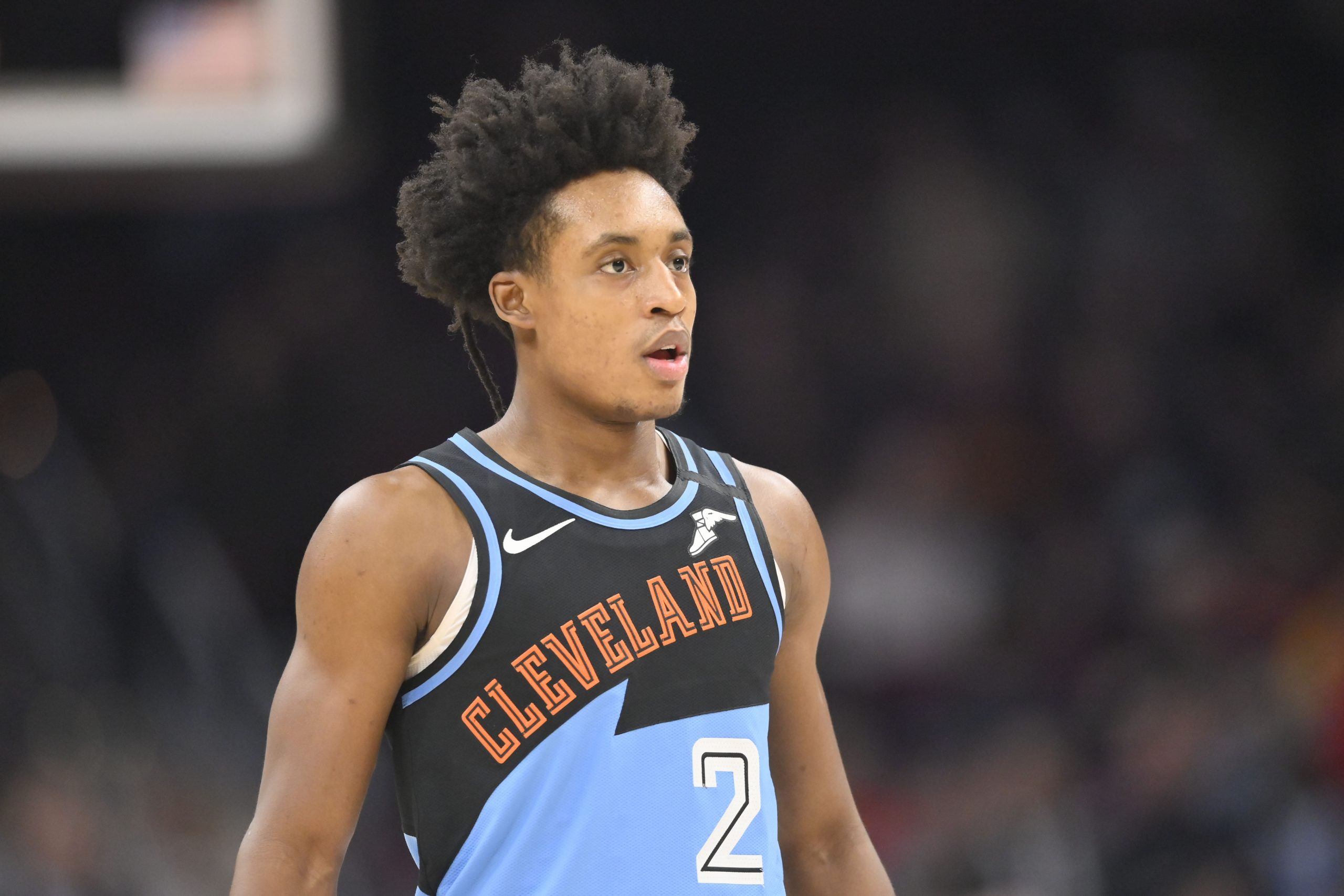
The front office has been working the edges of the roster with that in mind. Jake Fischer has reported that the Cavaliers are exploring trades involving Max Strus and Dennis Schroder, moves widely read as an effort to open room for James.
As CBS Sports’ Sam Quinn outlined in his leaguewide cap breakdown, Cleveland technically shows close to $27 million in first-apron space, but that figure evaporates once Harden’s new deal is factored in — which is why Quinn grouped the Cavaliers among the teams whose realistic offer is the minimum unless further money is moved.
That is precisely the number James’ camp is now signaling skepticism about. If Cleveland wants to change the equation, the path runs through a team-friendly Harden structure plus at least one salary-shedding trade — enough to generate a mid-level exception and get into the same financial neighborhood as Miami.
The waiting game cuts both ways
A drawn-out timeline is a mixed blessing for the Cavaliers. On one hand, it buys the front office time to execute the trades it reportedly needs.
On the other, every day James waits, the free-agent market thins around him, and Cleveland’s roster remains frozen while other contenders fill out their rotations. Harden’s own situation compounds the tension, since his willingness to wait is what keeps the Cavaliers’ flexibility alive.
Paul, for his part, made clear the timetable belongs to one person.
“I’m on his schedule,” Paul said. “I can’t tell the man how fast to move. When he’s telling me what he’s deciding, that’s when I’ll let you guys know.”
James remains remarkably productive for his age, having averaged 20.9 points, 7.2 assists and 6.1 rebounds per game across 60 games last season while shooting 51.5 percent from the field. Free agents can begin signing officially on July 6, but nothing in Saturday’s report suggests that date means anything to James.
For Cavaliers fans, the takeaway is uncomfortable but clear: The dream is alive, the relationships are real and the wait is going to test both — because right now, the two teams best positioned to pay LeBron James are not the one he grew up next to.