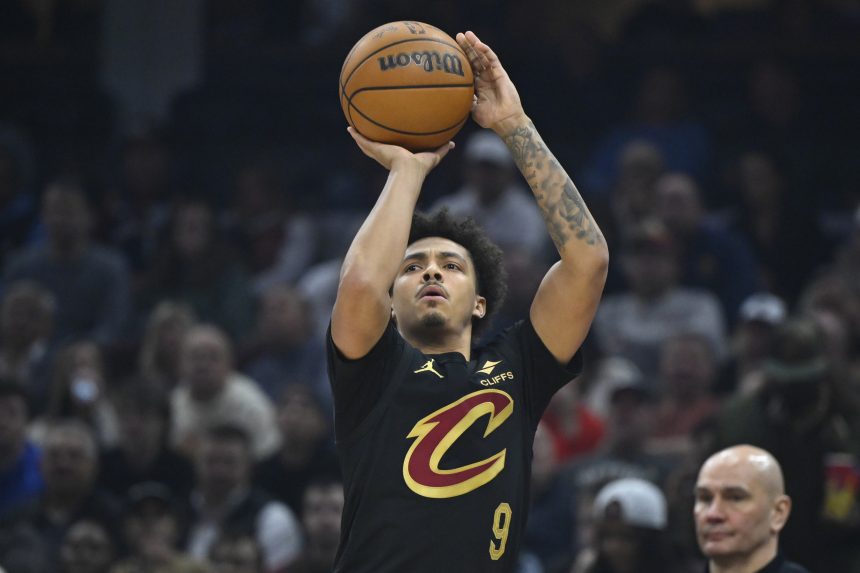
The Cleveland Cavaliers made their first important roster decision of the 2026 offseason on Monday, and on the surface it reads like routine housekeeping.
One day before the NBA draft, Cleveland exercised its fourth-year team option on guard Craig Porter Jr., keeping the 26-year-old under contract through the 2026-27 season. The timing and the cap math behind the decision, though, make it more telling than a standard depth move.
Cavaliers president of basketball operations Koby Altman announced the move Monday. The option is worth roughly $2.4 million and is non-guaranteed, becoming fully guaranteed only if Porter remains on the roster through Jan. 10. He is set to reach unrestricted free agency next summer, so this is a one-year commitment at a low number rather than a long-term bet.
A modest option with second-apron stakes
The reason this matters has less to do with Porter than with the team’s books. Just days ago, his option was being discussed around the league as something Cleveland might decline rather than exercise. In a June 20 breakdown of the Cavaliers’ cap situation, one analysis noted that if James Harden accepts his $42.3 million player option for next season, the Cavaliers would be expected to decline Porter’s option to help clear the space needed to duck under the second apron.
By picking the option up now, before Harden’s decision is settled, Cleveland chose to add roughly $2.4 million to its ledger instead of banking that slot as potential cap relief. For a team that has spent recent weeks looking for ways to trim salary, that is a small but real signal about how the front office expects the rest of the offseason to unfold.
What the decision signals before draft night
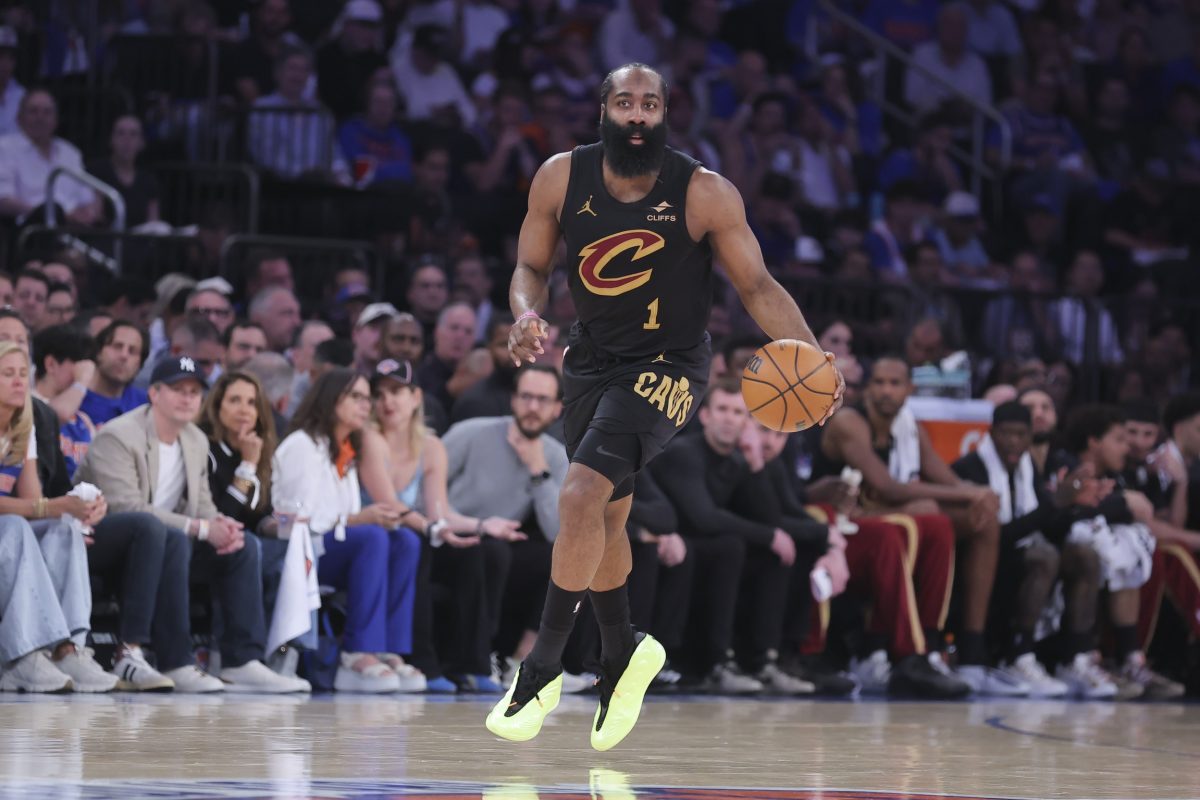
There are two reasonable ways to read the move, and they are not mutually exclusive. The first is that Cleveland is confident in the path most reporting has pointed to for Harden: opting out of the $42.3 million salary and re-signing on a restructured, multiyear deal that brings the team under the second apron. If the front office believed it would need Porter’s slot as emergency relief, declining the option would have been the cleaner route, so picking it up suggests the Cavaliers do not expect to be scrambling for that particular $2.4 million.
The second reading is just as practical. Exercising the option does not lock Porter onto the roster so much as it gives Cleveland a cheap, movable contract. A non-guaranteed deal at that number is exactly the kind of salary teams use as filler to match money in a trade, and the Cavaliers have shown they are willing to deal from the margins of their roster. Keeping Porter preserves depth and a useful trade chip at the same time.
The draft adds another layer. Cleveland holds the No. 29 pick on Tuesday and does not own a second-rounder after sending one to the Los Angeles Clippers in the Harden trade. With Porter back in the fold, the Cavaliers have one less reason to spend that selection on a developmental ball-handler purely to fill out the backcourt, which frees them to take the best player available or address need on the wing and in the frontcourt.
What Cleveland is buying in Porter
Porter has built his place in the league the hard way. He went undrafted out of Wichita State in 2023 and signed a two-way contract with the Cavaliers that July before earning a standard deal. This past season he appeared in a career-high 64 games with three starts, averaging 4.5 points, 3.4 rebounds and 3.2 assists per game in 17.9 minutes while shooting 45.0 percent from the field, per the team.
The counting numbers are modest, and his role thinned out late in the year. After Cleveland reshaped its backcourt at the trade deadline by adding Harden, Dennis Schroder and Keon Ellis, Porter slid down the rotation and saw mostly garbage-time minutes in the playoffs. His value was never really about scoring, though, as he pushes tempo, pressures the ball defensively and can run an offense in short bursts, the kind of low-maintenance depth a top-heavy roster needs.
His path to more minutes is not guaranteed. Cleveland is expecting second-year guard Tyrese Proctor to take a step forward, and the backcourt is crowded with Donovan Mitchell, Harden, Proctor and Porter all in the mix. Retaining Porter at this price, however, was an easy call regardless of where he lands in the pecking order.
The Harden question still hangs over everything
None of Cleveland’s offseason math is final until Harden settles his own future. He holds a $42.3 million player option for the 2026-27 season and faces a June 29 deadline to decide, with the new salary-cap year beginning July 1. That tight window is why every smaller move, including Porter’s option, is being read through the lens of the apron.
Harden has been consistent about wanting to stay.
Asked after the Cavaliers’ Game 4 loss to the New York Knicks whether he expected and wanted to return, he told reporters, “Yes, 100 percent. Definitely both, to answer.”
ESPN front office insider Bobby Marks projected a two-year, $56 million deal for Harden in Cleveland assuming he opts out, a structure that would help keep the team under the second apron while preserving its core.
Until that signature is in, the Cavaliers’ cap picture stays cloudy. Picking up Porter’s option does not resolve the Harden situation, but it is a quiet indication that Cleveland is planning around a roster that stays largely intact rather than one being torn down for relief.
Bottom line
On its own, a $2.4 million option on a reserve guard is the kind of transaction that barely registers in late June. Stacked against the second-apron pressure and the looming Harden decision, it is a small tell. Cleveland kept a known, useful player and a tradeable contract, and it did so in a way that suggests the front office is not bracing for a last-minute cap scramble. With the draft a day away and free agency right behind it, that is a clean way to start the offseason.