
The Dennis Schroder trade was never the whole plan. According to NBA insider Marc Stein, writing in the latest edition of The Stein Line, the Cleveland Cavaliers are continuing to search the league for a trade partner willing to take on Max Strus, even after shipping Schroder to Charlotte on Friday.
The two moves are connected, and the reporting makes the sequencing clear. Cleveland’s front office is trying to open as much financial breathing room as possible before it finishes the two biggest items left on its offseason list: a new contract for James Harden and the pursuit of a young wing on the free agent market.
Moving Strus and the final season of his deal is the next domino. The Cavs want to clear the last year of Strus’ $16.7 million contract to create room to add either Peyton Watson or free agent forward Jonathan Kuminga.
Sources also told Stein that Cleveland is expected to re-sign Harden to a multi-year deal “soon-ish.”
Why Max Strus is the piece that has to move
None of this is a comment on what Strus brings when he’s on the floor. It’s about what his contract represents on a payroll that needs flexibility more than it needs a sixth shooter.
Strus is entering the final season of his deal, which makes him the cleanest large salary Cleveland can move without touching its core. An expiring contract attached to a career 37.0 percent 3-point shooter should hold real appeal for teams looking for spacing help, and that’s precisely why the Cavs believe a market exists at all.
The complication is his 2025-26 season. Strus appeared in just 12 regular-season games, a stretch limited by a foot injury, though he was excellent in that small sample, averaging 11.2 points and 5.4 rebounds per game while hitting 40.2 percent of his 3-point attempts.
He then returned to a full-time rotation role in the playoffs, playing all 18 games of Cleveland’s run to the Eastern Conference Finals and averaging 9.6 points and 4.8 rebounds in 26.7 minutes per game.
That postseason workload matters for the trade market. Any team weighing a deal isn’t just buying an expiring number — it’s getting a proven playoff contributor who held up across two months of high-leverage basketball coming off the injury.
The cap math behind the push
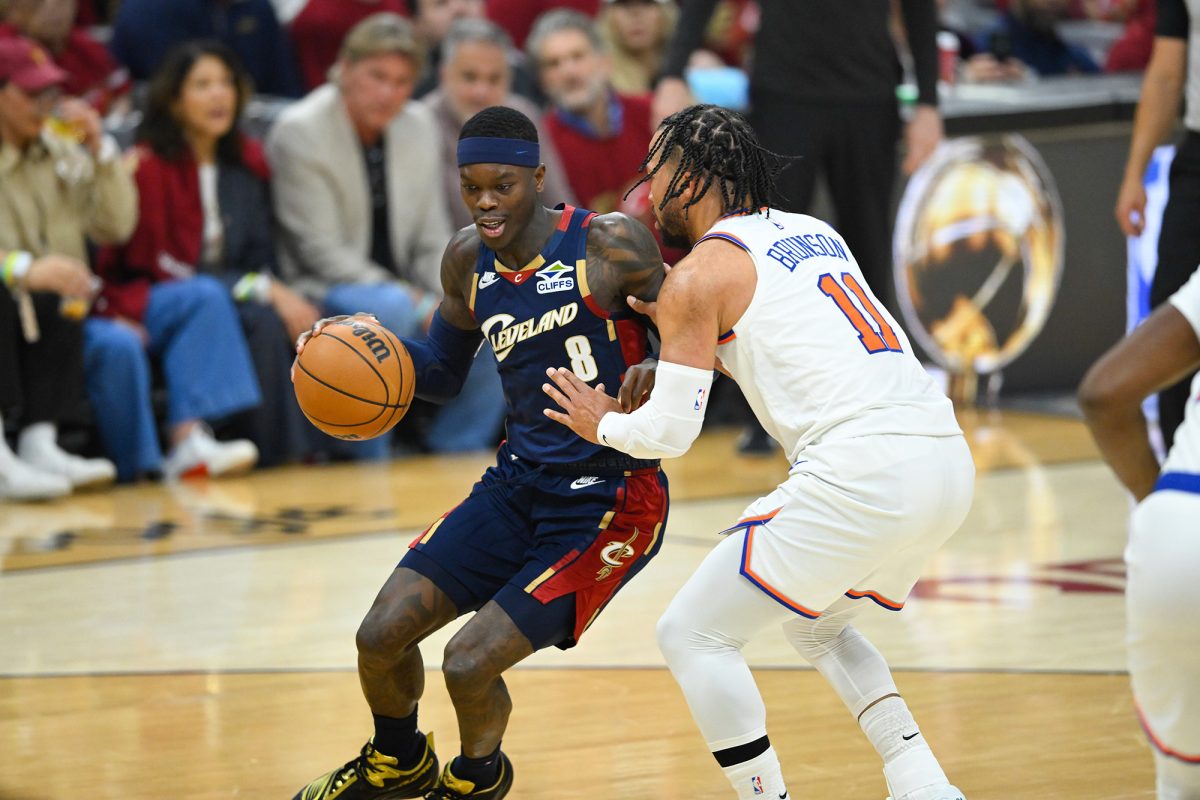
Friday’s trade set the table. Cleveland agreed to send Schroder and cash to the Charlotte Hornets in exchange for Tre Mann, and salary cap analyst Yossi Gozlan broke down the savings: The swap freed up $6.8 million, leaving the Cavs roughly $30 million under the first apron with at least one open roster spot — one that is being held for Harden. Cleveland also sits about $42 million under the second apron and retains the ability to spend up to it.
Those numbers explain the urgency around Strus. His $16.7 million comes off the books entirely if Cleveland can find a taker, and every dollar of that space changes what the front office can offer Harden and how aggressive it can get on the wing market.
The Cavs are building toward a roster they believe can finish the job next spring, and the math has to work first. The hard part is timing.
It’s the third week of August, most rotations around the league are set and the teams with room to absorb a $16.7 million salary generally want compensation for doing it. That’s the unspoken tension: The desire to move Strus is not in question, but the market for doing so this late in the offseason is thin, which is why the search has now stretched across multiple weeks and survived one completed trade.
What it means for Harden, Watson and the wing chase
The Harden piece is the most immediate. His return has been the assumption all summer — the guard has been working through his free agency with one legal distraction now resolved — and Stein’s reporting now attaches a loose timeline to it.
A multi-year agreement arriving “soon-ish” means the Cavs are locking in their backcourt before training camp, and the size of that number will determine exactly how much room is left for everything else.
Then there’s the wing pursuit, which has defined Cleveland’s offseason since LeBron James chose Philadelphia. Denver has put contract offers in front of Watson worth around $70 million over four years — an average of $17.5 million annually — while Watson’s camp is believed to want more than the $25 million per year Christian Braun landed in his five-year, $125 million extension last October.
That leaves a gap of at least $7.5 million per season between the restricted free agent and the only team that can match for him. Cleveland cannot sign Watson outright with its current cap situation, which makes a sign-and-trade with Denver the realistic path unless the Cavs clear enough salary to open genuine room.
Watson could also simply accept his $6.5 million qualifying offer and hit unrestricted free agency next summer, a scenario that would put real pressure on the Nuggets, who have reportedly lowered their sign-and-trade asking price to approximately one first-round pick plus a quality rotation player.
Every dollar Cleveland sheds makes its side of that framework easier to build — which is exactly the leverage Watson’s representatives want to exist. The Cavs ran into Denver’s matching rights earlier this month, and this is the counter.
Kuminga remains the parallel option, and the fact that Stein lists both names suggests Cleveland is keeping its choice open until it knows how much room it actually has.
So the order of operations is now visible: move Strus if a partner materializes, sign Harden on the timeline the front office controls and then take the biggest swing the remaining math allows.
The Schroder trade proved the Cavs are willing to pay cash to create flexibility. The Strus search will show how far they’re willing to go to use it.