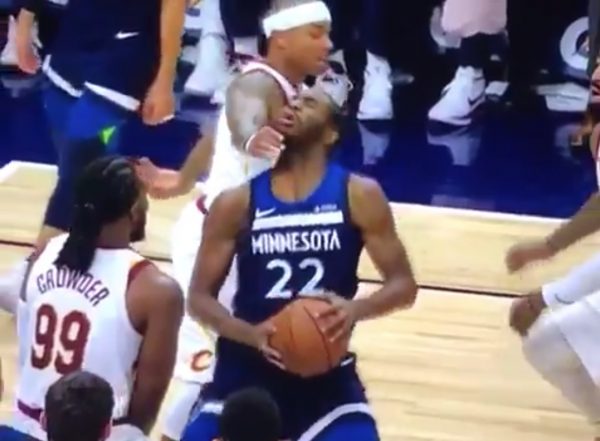

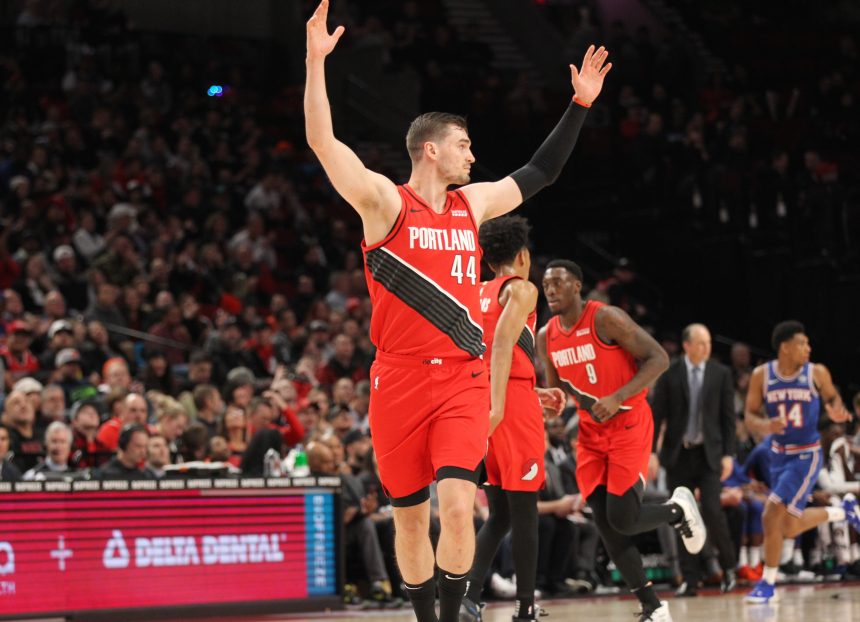
The Cleveland Cavaliers did not just sign Mario Hezonja. They signed him with a built-in exit, and the date on that exit is now public.
According to HoopsHype’s Michael Scotto, the one-year deal Cleveland finalized with the Croatian forward carries no guaranteed money at signing, and his $2.8 million salary “becomes fully guaranteed if he remains on the roster past November 15th.”
Update: The Cleveland Cavaliers signed Mario Hezonja to a one-year, non-guaranteed deal with a trigger date, sources told @hoopshype. His $2.8 million salary becomes fully guaranteed if he remains on the roster past November 15th. ESPN first reported an agreement for both sides.
— Michael Scotto (@MikeAScotto) August 1, 2026
That single detail reframes a transaction that had already produced one of the stranger sagas of Cleveland’s offseason. The headline version — EuroLeague standout returns to the NBA on a veteran-minimum deal — was true on Friday and remains true today.
But the structure Scotto revealed Saturday tells a more precise story about how the front office views the 31-year-old, and about how much leverage Hezonja surrendered on his way back across the Atlantic.
The deal Cleveland actually signed
The agreement itself dates to July 26, when Hezonja and the Cavaliers came to terms on a one-year, $2.8 million contract, as agent Michael Tellem of Excel Sports Management told ESPN.
What followed was anything but routine. Real Madrid pushed back on releasing the forward because his NBA exit clause had lapsed on July 20, six days before he had a team lined up. The standoff finally resolved Friday, when Madrid announced the end of Hezonja’s four-year run with the club and Marc Stein noted that the league’s publicly available transactions log showed Cleveland had processed the signing.
Saturday’s report supplies the missing piece: what kind of contract survived all of that. The answer is a deal in which Cleveland owes Hezonja nothing on day one.
If he is waived at any point before the trigger date — during training camp, during preseason or through the season’s opening weeks — the Cavaliers walk away with minimal cost. If he is still on the roster when Nov. 15 arrives, the full $2.8 million locks in for the season.
Why the trigger date cuts both ways
It would be easy to read the structure as purely team-friendly, and the audition element is real. Cleveland gets a full training camp plus roughly the first month of the regular season to evaluate whether a player who last appeared in an NBA game in 2019-20 can still contribute at this level, all without committing a dollar of guaranteed salary.
For a front office operating with little more than minimum-level tools this summer, that kind of optionality on a roster spot has genuine value heading into a season where the trade market may matter more than the one that just closed.
But the date itself contains a concession in the other direction. Non-guaranteed contracts around the NBA typically do not become fully guaranteed until the league’s standard date in early January, which means teams usually hold their escape hatch open deep into the season.
Cleveland’s version slams shut in mid-November. Hezonja either makes this roster out of camp and survives a few weeks of games — at which point he has certainty most players on non-guaranteed deals will not enjoy for another two months — or the experiment ends quickly and cleanly for both sides.
The structure functions less like an open-ended tryout and more like a compressed one with a defined verdict date. There is one more wrinkle worth noting.
Eurohoops reported alongside the Scotto news that the NBA has warned its franchises about hefty fines for signing a player and then cutting him at no cost purely to facilitate a move back to Europe. Whatever else the Nov. 15 date represents, it does not read like a paper transaction. Cleveland structured a real evaluation with real protection, not a favor.
The gamble behind the signature
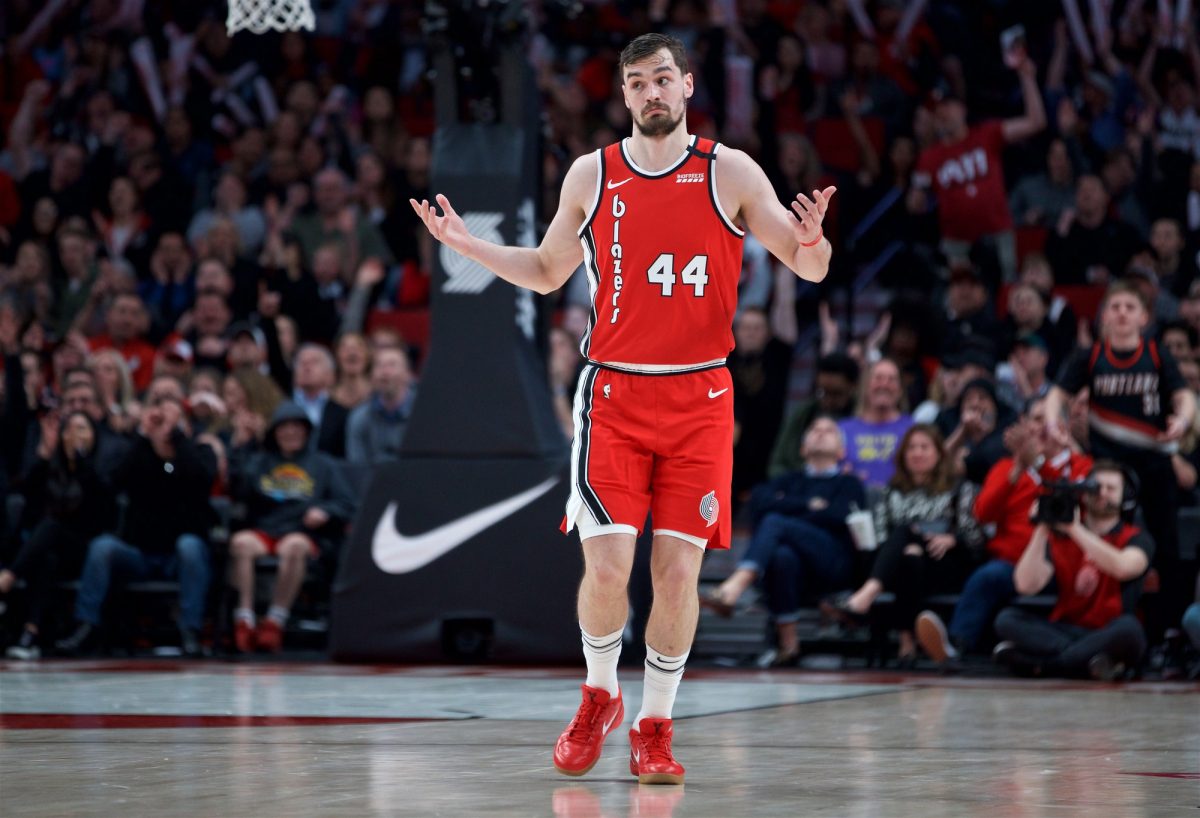
For Hezonja, accepting this deal amounts to the largest bet of a career that has been defined by them. This is a player who was just named MVP of Spain’s Liga Endesa, who won the 2023 EuroLeague title during a four-year Real Madrid tenure that produced six trophies by the club’s own farewell accounting, and who declined conditional fallback offers from three EuroLeague clubs because he believed his NBA return would stick.
A player with that resume taking zero guaranteed money is not the market’s usual outcome. The likeliest explanation runs through the calendar.
Hezonja’s exit clause expired July 20 while the entire league sat frozen waiting on LeBron James, and by the time James chose the Philadelphia 76ers and Cleveland moved within 48 hours, the forward was negotiating from the wrong side of a lapsed deadline with a European club disputing his departure.
Every complication that delayed the signing also chipped away at his ability to demand protection in it. What he is betting on is the player he has become since American audiences last saw him.
The Orlando Magic made Hezonja the No. 5 overall pick in 2015, and across five seasons with the Magic, New York Knicks and Portland Trail Blazers he averaged 6.9 points, 3.1 rebounds and 1.3 assists per game while shooting 31.9 percent from deep, which lists him at 6-foot-8 and 220 pounds.
Those numbers describe a disappointment. The six years since describe something else entirely — a player who rebuilt himself into one of Europe’s best forwards and now returns at 31 to prove the two versions can be reconciled.
What it means for the post-LeBron roster
The stakes on Cleveland’s side are about the shape of the rotation this front office is assembling on the fly. The Cavaliers moved on Hezonja within hours of losing James to Philadelphia, and the signing was always going to be judged against the alternatives Cleveland did not land.
A non-guaranteed structure sharpens that judgment: If Hezonja looks like the Liga Endesa version in October, the Cavs will have added rotation-caliber wing depth for the minimum, and if he does not, the roster spot reopens before Thanksgiving with the trade season still ahead.
That is a sensible place for this franchise to be after the month it just had. The team spent July watching its entire free agency plan hinge on one man’s decision, then spent another week waiting on a Spanish club to release its consolation prize.
The contract that emerged from all of it gives Cleveland a defined window to find out what it actually acquired, and it gives Hezonja 15 weeks — camp, preseason and a month of games — to make the money real. Both clocks start now.