
James Harden has not officially re-signed with the Cleveland Cavaliers, and according to ESPN’s Ramona Shelburne, the delay is less a stalled negotiation than a deliberate strategy designed to keep the front office’s options open.
Ramona Shelburne on James Harden and the Cavs:
"I think that could happen relatively soon. The question is gonna be is it a two year deal, a three year deal, what the structure looks like is gonna determine what the money looks like. But the Cavs are still poking around with… pic.twitter.com/jG9ZQ9v3jm
— Oh No He Didn't (@ohnohedidnt24) July 30, 2026
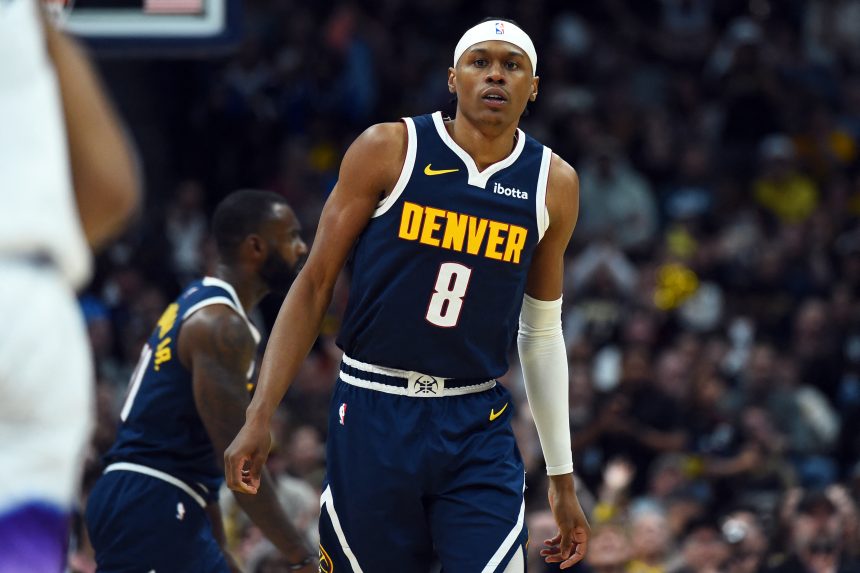
Appearing on ESPN’s “NBA Today” on Thursday, Shelburne reported that a new Harden deal is likely close but that the veteran guard is deliberately giving Cleveland’s front office room to operate, and she attached a specific name to that flexibility: Denver Nuggets restricted free agent Peyton Watson.
What Shelburne said about Harden’s timeline
Harden declined his $42.3 million player option for the 2026-27 season back in late June, with ESPN’s Shams Charania reporting at the time that the two sides would work toward a new multiyear agreement.
A month later, that agreement still has not been signed, and Shelburne explained why the holdup may be working in Cleveland’s favor.
“I think that could happen relatively soon. The question is gonna be is it a two-year deal, a three-year deal, what the structure looks like is gonna determine what the money looks like,” Shelburne said.
Shelburne then connected the contract talks directly to the wing market.
“But the Cavs are still poking around with Peyton Watson and I think that’s why James has given them a lot of room to negotiate,” she said.
The logic is straightforward. Until Harden’s new salary hits the books, Cleveland retains maximum maneuverability under the league’s apron system, and the shape of his eventual contract — the starting number as much as the length — will determine how much roster-building room remains.
Why Peyton Watson is worth waiting for
Watson, 23, broke out in his fourth NBA season. The former 30th overall pick started 40 of his 54 appearances for Denver in 2025-26 and averaged 14.6 points, 4.9 rebounds and 2.1 assists per game while shooting 49.1 percent from the field, 41.1 percent from 3-point range and 73.0 percent from the free-throw line, per Basketball-Reference.
He added 1.1 blocks per game, and at 6-foot-8 with a defense-first pedigree, he profiles as exactly the kind of two-way starting wing Cleveland has lacked.
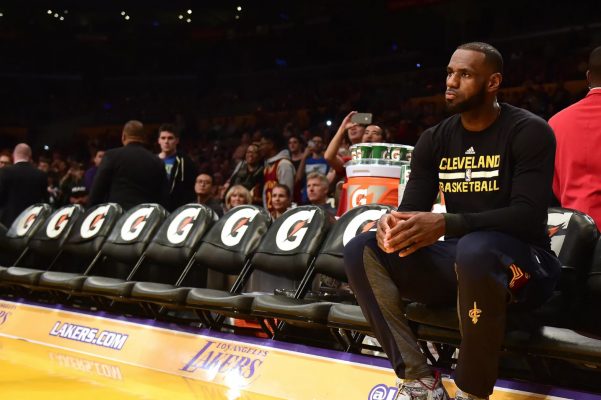
That is the archetype the Cavs hoped to fill with LeBron James before the four-time champion chose the Philadelphia 76ers, a pursuit that ended despite Cleveland landing the only in-person free agency meeting James granted.
The age math matters, too. Watson is more than a decade younger than the 36-year-old Harden and would arrive on his second contract, giving Cleveland a long-horizon piece next to Donovan Mitchell and Evan Mobley rather than another win-now rental.
The sign-and-trade math
This is where the pursuit gets complicated. Watson is a restricted free agent, meaning Denver can match any offer sheet, and the Cavaliers do not have the cap space to sign him outright.
The realistic route is a sign-and-trade, and that path runs through the Nuggets’ own financial bind. Denver sits in the second apron, and the Nuggets’ contract offer to Watson — five years and roughly $70 million — has come in well below the number Watson’s camp has sought.
Meanwhile, Charania reported on ESPN’s “NBA Today” this week that Denver has softened its trade demands. The Nuggets had initially wanted a package resembling the Walker Kessler deal, built around two first-round picks and two swaps, but the price has since dropped to a quality rotation player plus a single first-round pick, per Charania’s entry on ESPN’s offseason buzz tracker.
That reduced ask is precisely the range where Cleveland can compete. The Cavs have been open to moving salary all summer, with Dennis Schroder and Max Strus the most frequently cited candidates, and either contract paired with draft compensation begins to resemble what Denver now reportedly wants.
Any deal would also need to leave the Nuggets below the second apron on the back end, which limits how much salary they can take back and likely pushes a Watson transaction toward a third team.
How Harden’s wait creates the runway
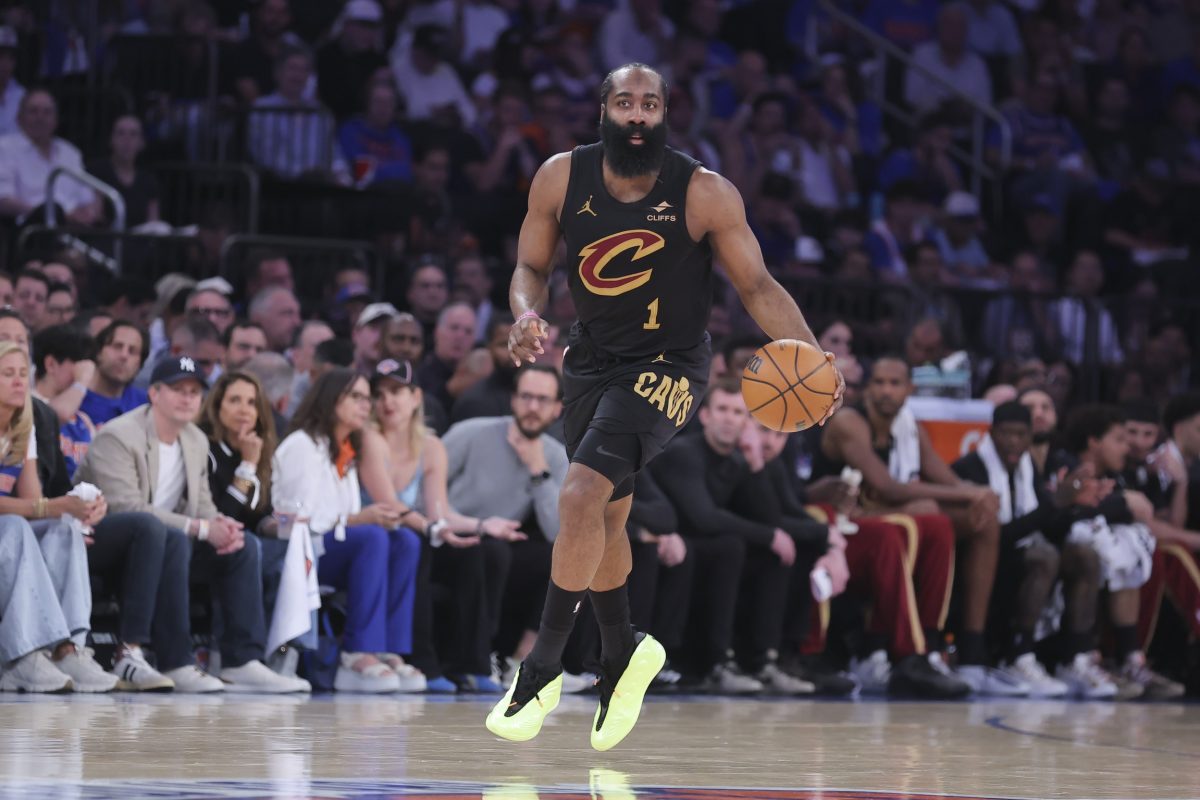
None of that machinery works if Harden signs first at a big number. By staying unsigned, Harden functions as Cleveland’s escape valve: The front office can pursue Watson, price out the sign-and-trade permutations and then calibrate Harden’s contract — length, starting salary and structure — around whatever the wing market allows.
It mirrors the approach Harden took in June, when his opt-out was widely understood as a move to preserve the team’s flexibility for the James pursuit. That swing missed, and the Cavaliers pivoted to a veteran-minimum agreement with Mario Hezonja.
The Watson chase is the more ambitious sequel, and Harden’s cooperation is once again the enabling condition.
The wider wing board
Watson is not the only name on Cleveland’s list. Cleveland.com’s Chris Fedor, speaking on the Wine and Gold Talk podcast this week, confirmed the team’s interest spans three players: Jonathan Kuminga, Watson and DeMar DeRozan.
“I’m told the Cavs have expressed interest in all three of those guys,” Fedor said.
Fedor expanded on the fallback-plan landscape in a piece published Thursday morning, noting that none of the paths is straightforward.
Each option carries a different cost. DeRozan, 36, is the simplest to acquire as an unrestricted free agent but is also drawing interest from Washington, Miami and Denver.
Kuminga remains locked in a sign-and-trade standoff of his own, with the Lakers viewed as serious competition. Watson is the hardest deal to construct but the cleanest long-term fit.
The tell to watch is Harden himself. The moment his signature lands on a new contract, Cleveland’s flexibility snaps into its final shape — and the size of that deal will say everything about whether the Watson pursuit is still alive.