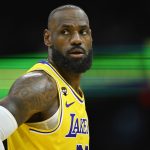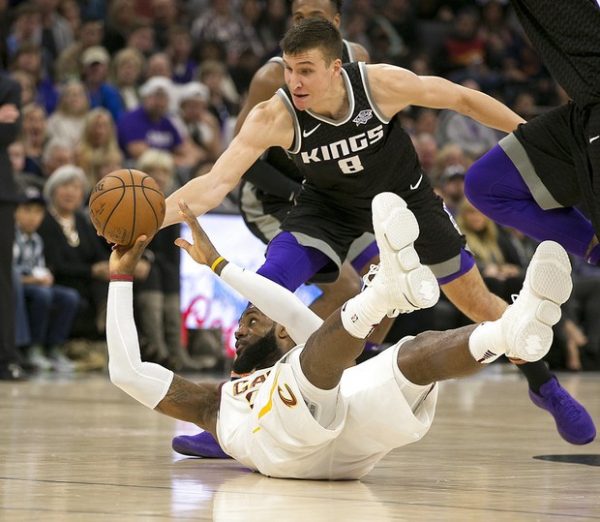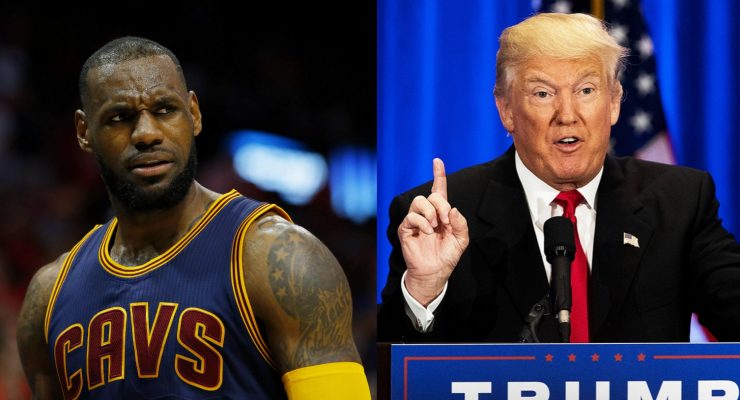
The wait is over, and the answer is the one Cleveland spent 24 days dreading. LeBron James is signing with the Philadelphia 76ers on a two-year, $8 million deal that includes a player option, ESPN’s Shams Charania reported Friday, citing Klutch Sports Group and Klutch CEO Rich Paul.
BREAKING: LeBron James is signing with the Philadelphia 76ers on a two-year, $8 million deal with a player option, Klutch Sports Group and Klutch CEO and Game Over show host Rich Paul tells ESPN. pic.twitter.com/ALOlTkgdAV
— Shams Charania (@ShamsCharania) July 24, 2026
The agreement ends the free agency saga that froze the Cavaliers’ offseason — and much of the NBA’s — for nearly a month, and it sends the greatest player in franchise history to a conference rival for what he says will be his final chapter.
James, 41, announced the decision himself in a series of posts on X, writing that he initially believed he had played his last game when the season ended before deciding he still had more to give.
He framed the choice as his last one, insisting it was not about money or family but about chasing a fifth championship, and he closed with a message aimed squarely at the fan base he is leaving behind for a second time. “Thank you LA. Miami I’ll forever love and Northeast Ohio will always home!” James wrote.
For Cavaliers fans, that farewell will land somewhere between a tribute and a taunt. Cleveland was a finalist to the end, and the belief inside Northeast Ohio was that the story arc only pointed one direction.
A recruitment that ended in four posts
Cleveland.com Cavs beat reporter Chris Fedor, who days earlier had predicted Cleveland would make the best argument for James in this race, delivered the verdict in six words. “Not Cleveland. Not Golden State. Not Miami.” Fedor wrote, confirming the finalist field James turned down.
That field tells its own story. The Cavaliers offered the homecoming, the market that reveres him and the franchise where he won the 2016 title.
James chose none of it, opting instead for a Philadelphia roster that he clearly views as the superior basketball fit. The 76ers can now run out a lineup built around Joel Embiid, Jaylen Brown, Tyrese Maxey and James — a collection of talent no other suitor could approach.
The money underscores the point. James is coming off a season in which he earned roughly $52.6 million on his Los Angeles Lakers player option and still averaged 20.9 points, 7.2 assists and 6.1 rebounds per game across 60 games.
He will make a fraction of that in Philadelphia. A player taking that kind of discount is buying something with it, and what he bought was the roster he considers most likely to deliver ring No. 5.
The Gansey twist
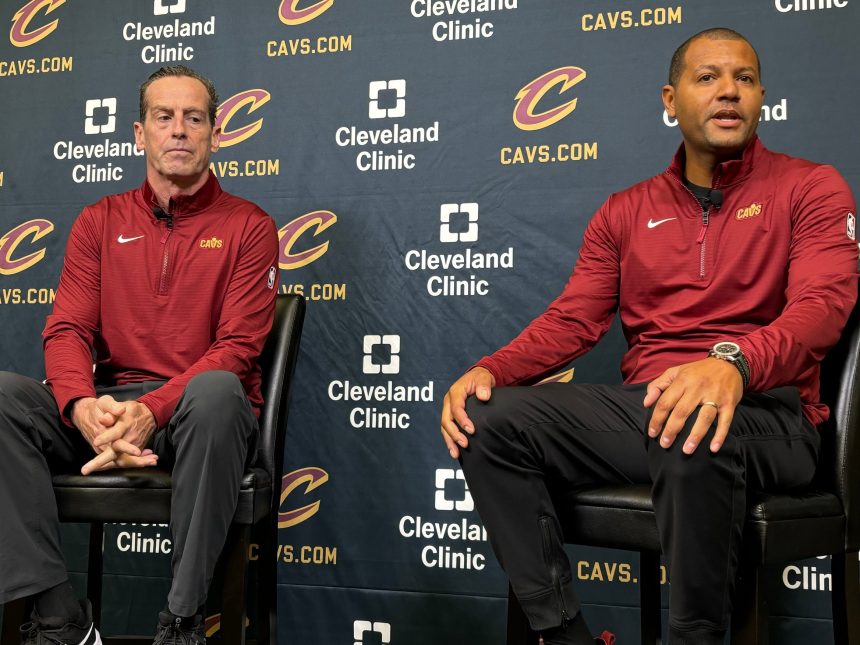
The cruelest detail for Cleveland involves the man who closed the deal. Marc Stein noted that since hiring Mike Gansey as its new lead executive, Philadelphia has traded for Brown and now landed James over Cleveland, Miami and Golden State.
Gansey spent years in the Cavaliers’ front office, including during James’ second stint in Cleveland, before departing for Philadelphia this offseason.
In other words, the executive who helped run Cleveland’s basketball operations took the relationships and institutional knowledge that came with that job and used them to build the one pitch James could not refuse.
The Cavaliers did not just lose the sweepstakes. They lost it to one of their own.
The bill for waiting
The decision’s cost to Cleveland goes beyond the emotional gut punch, because the pursuit itself carried a price. For 24 days, the Cavaliers essentially could not operate.
James Harden’s new contract has been parked while the front office waited out free agency’s biggest domino, roster spots stayed open and the team’s other targets sat in limbo — all while a hard-capped, apron-squeezed payroll left no room to hedge.
The paralysis extended well past Cleveland. As one source told Marc Stein’s Substack before the decision, the expectation around the league was that “eight or nine players sign right after LeBron makes his choice.” That dam has now broken, and the Cavaliers must move quickly in a market where every team that was waiting on James is suddenly shopping in the same aisle.
The competitive math is unforgiving. The Cavaliers spent nearly a month preserving flexibility for a player who chose a team that spent that same month getting better.
Philadelphia entered the summer having already swung the Brown trade, and it exits it with James. Cleveland enters August with the same roster questions it carried into July, now with less time and more competition to answer them.
The pivot board: Kuminga, Hezonja and the salary math
The contingency plan now becomes the plan, and it starts with Jonathan Kuminga.
“The Cavaliers have continued to keep tabs on Kuminga consistently,” HoopsHype’s Michael Scotto reported earlier this week, even while James sat atop Cleveland’s wish list. Scotto added that Max Strus and Dennis Schroder have surfaced as trade candidates amid that pursuit, with the Charlotte Hornets linked to Schroder as a backup point guard option.
The mechanics matter here. Acquiring Kuminga by sign-and-trade would hard-cap Cleveland at the first apron, which means shedding salary first, and the workable constructions the Cavs have explored have consistently required moving Strus’ expiring money to a third team.
Whether the front office was clearing a runway for James or for his replacement, that flight plan was always going to involve one of Strus or Schroder leaving. There is also a wild card from Europe.
Marc Stein and Jake Fischer reported that the Cavaliers registered interest in former No. 5 overall pick Mario Hezonja, the Real Madrid forward who has made clear he wants an NBA return. That pursuit was explicitly on hold pending James’ decision, along with the rest of the league’s business.
It is on hold no longer, and a versatile 31-year-old wing on a modest deal is precisely the kind of depth piece Cleveland’s thin forward rotation needs regardless of how the Kuminga situation resolves.
What comes next
The immediate dominoes are clear. Harden’s contract, structured around the possibility of a James arrival that never came, should now move toward resolution.
The Kuminga market, which had been stuck behind the same logjam, will accelerate — and Cleveland is far from the only interested party. The Hezonja pursuit can proceed.
And the front office must do all of it against the backdrop of a fan base processing the second most painful rejection in franchise history, this one delivered not by a young superstar chasing his first ring but by a 41-year-old legend who decided the best version of his ending was somewhere else.
The Eastern Conference picture is bleaker for the loss. The Cavaliers were swept out of last season’s conference finals by the New York Knicks, and the team that just added James had already vaulted into the East’s top tier by acquiring Brown.
Cleveland’s path back to the Finals conversation did not need another obstacle, and it just gained a familiar one wearing No. 23 in a different shade of blue.
For 24 days, the Cavaliers bet that history, home and sentiment would win out over roster math. On Friday, James told them the math won.
Now Cleveland has to do some math of its own, and quickly, because the offseason it put on hold for a month is finally, fully underway.