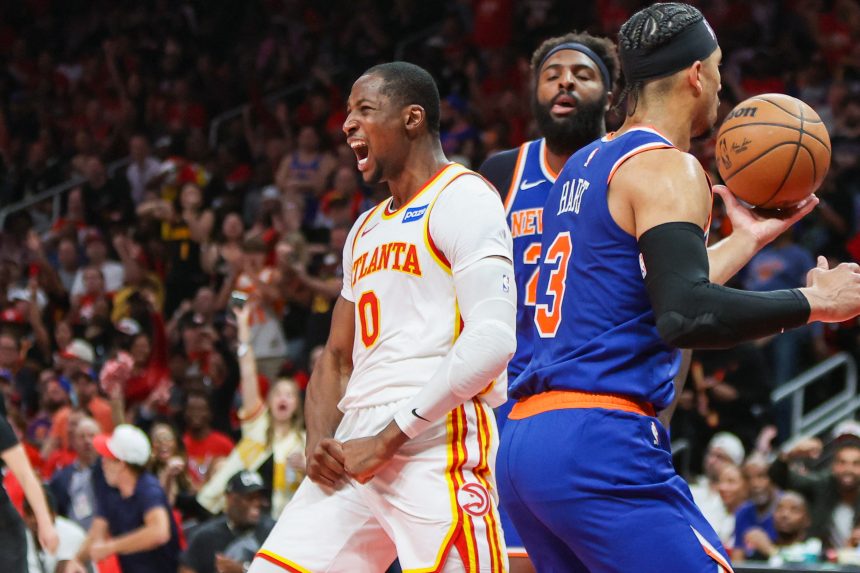
For most of July, the Cleveland Cavaliers’ offseason has been defined by two names that don’t play for them: Jonathan Kuminga and Peyton Watson.
After LeBron James took his homecoming decision off the table by choosing the Philadelphia 76ers, the front office turned its attention to the two young forwards as the centerpiece of a wing-depth overhaul. On Tuesday, the most plugged-in voice on the beat explained why that plan is running out of road.
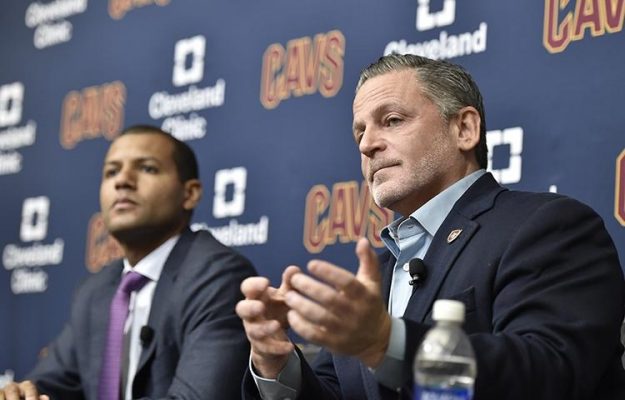
Speaking on Cleveland.com’s “Wine and Gold Talk Podcast,” Cavaliers insider Chris Fedor characterized the idea of Cleveland acquiring both players as “highly unlikely.” More sobering for Cavs fans, Fedor made clear that even a single addition is no sure thing.
“I think both of them is highly unlikely,” Fedor said. “Again, on this podcast, we never say never and we try and deal in reality as much as we possibly can.”
What Chris Fedor Said About the Cavs’ Chances
Fedor did not shut the door entirely, noting that he tries to avoid absolutes this time of year. But his assessment of the double pursuit was blunt.
Getting one of them is going to be hard enough given the salary cap situation that the Cavs are currently in, given the lack of perceived trade assets and given the salary cap situation of some of these other teams that we’re talking about here,” Fedor said.
That last part matters. Neither Kuminga nor Watson can simply be signed with cap space the Cavs don’t have.
Kuminga, a restricted free agent who was dealt from Golden State to the Atlanta Hawks at February’s trade deadline, would almost certainly have to arrive through a sign-and-trade.
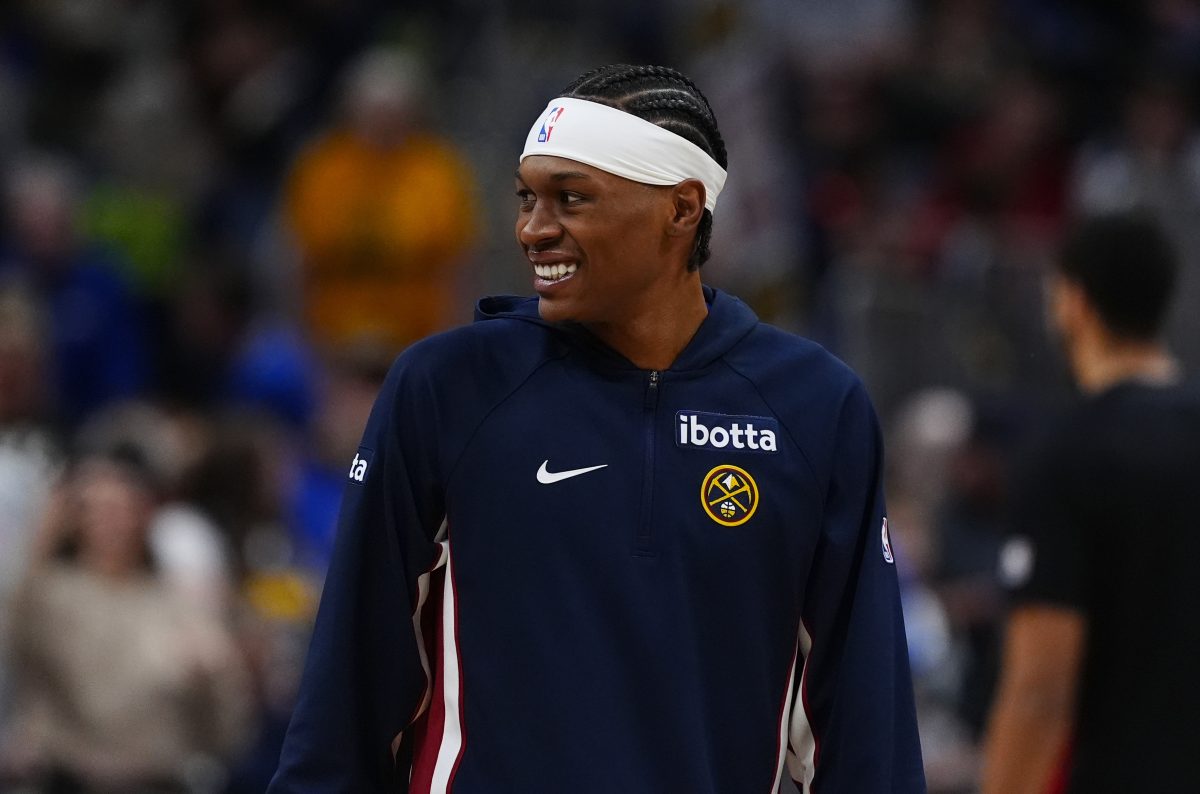
Watson, a restricted free agent himself, would require the same structure with the Denver Nuggets. That means Cleveland doesn’t just have to agree with the player — it has to make the deal worth another front office’s time.
Atlanta has been explicit on that point. The Hawks have told teams around the league they are open to accommodating Kuminga in a sign-and-trade, but only if the return includes something they genuinely want rather than a courtesy package.
That stance has slowed talks for every interested team, Cleveland included.
Three Reasons the Math Isn’t Working
The first roadblock is Atlanta’s leverage. Because Kuminga’s rights belong to the Hawks, Cleveland can’t outbid anyone with money alone — it has to send back real value, and the Cavs’ most recent fallback-plan has consistently framed their asset cupboard as one of the thinnest among Kuminga’s suitors.
The second is Denver’s price. Watson is coming off a breakout season, and the Nuggets have shown no urgency to move him.
A Denver front office member told cap analyst Keith Smith earlier this offseason that the organization’s stated intention is to keep Watson, and previous reporting indicates Denver wants at least one first-round pick in any sign-and-trade. Watson also reportedly turned down a five-year, $70 million offer from the Nuggets, which tells you where his camp has set the floor.
The third roadblock is structural. Under the collective bargaining agreement, any team that acquires a player via sign-and-trade is hard-capped at the first apron for the season.
For a Cleveland team already carrying Donovan Mitchell’s max extension and an unresolved James Harden negotiation, that hard cap turns every dollar in the deal into a roster-building constraint.
Both forwards are believed to be seeking salaries in the $20 million range or above — Kuminga made $23.8 million last season, while Watson played out the final year of his rookie deal at roughly $4.4 million — so acquiring either one reshapes Cleveland’s cap sheet, and acquiring both was always closer to fantasy than plan.
What Kuminga and Watson Would Actually Give Cleveland
It’s worth remembering why the Cavs have spent their summer on this particular hill.
Watson, 23, just delivered the best season of his four-year career. The former 30th overall pick averaged 14.6 points, 4.9 rebounds and 2.1 assists per game across 54 appearances for Denver, shooting 49.1 percent from the field and 41.1 percent from three, per Basketball-Reference.
That’s a leap from 8.1 points per game the year before, and it came with the defensive length and energy that made him a rotation piece on a title roster as a rookie. A 6-foot-8 wing entering his prime who defends and now shoots is exactly the archetype Cleveland’s roster lacks.
Kuminga, also 23, is the higher-usage, higher-variance version of the same idea. The former seventh overall pick split last season between the Warriors and Hawks, averaging 12.2 points and 5.6 rebounds per game over 36 appearances. His raw physical tools have never been the question; consistent shooting and a defined role have.
For a Cavs team that leaned heavily on its guards for shot creation, a downhill forward with untapped ceiling is a worthwhile bet — at the right price. The problem, as Fedor laid out, is that the price keeps not being right.
Where This Leaves the Cavs’ Offseason
Since James chose Philadelphia, Cleveland’s only outside addition has been Mario Hezonja. That’s not the offseason anyone in the building drew up, and it’s part of why the Kuminga and Watson pursuits have taken on outsized importance — they represent the last realistic path to meaningful roster improvement before training camp.
The Harden situation hangs over all of it. Cleveland declined his $42.3 million player option earlier this summer to create flexibility during the James pursuit, and his next contract remains unsigned.
Until that number is settled, the front office is negotiating every sign-and-trade scenario with one hand tied, because Harden’s eventual figure determines how much apron room any incoming salary would leave.
The realistic read on Fedor’s comments isn’t that the offseason is over. It’s that the Cavs are down to a one-or-none proposition, and the version of this summer where Cleveland adds both young forwards should be retired from fan conversation.
If a deal happens, it likely happens because Atlanta finds a sweetener it likes or Denver’s stalemate with Watson’s camp breaks in a direction that makes a first-round pick feel like a fair exit ramp. Neither of those levers is in Cleveland’s hands, which is the most uncomfortable truth of a summer that began with dreams of LeBron James and may end with Mario Hezonja as the headline.
Training camp will arrive with or without a resolution. The next few weeks will reveal whether the front office can thread a needle Fedor just described as barely threadable — or whether the fallback plan needs a fallback plan of its own.