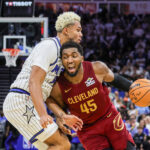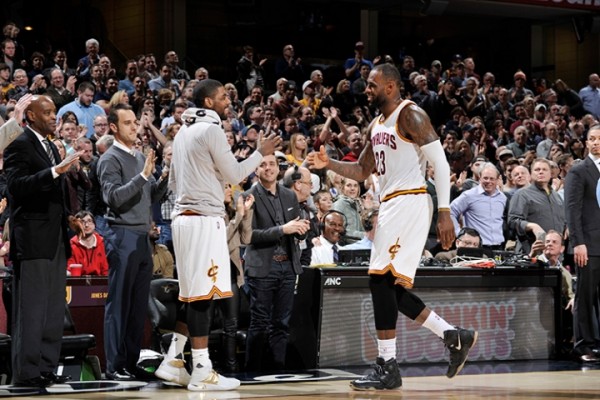

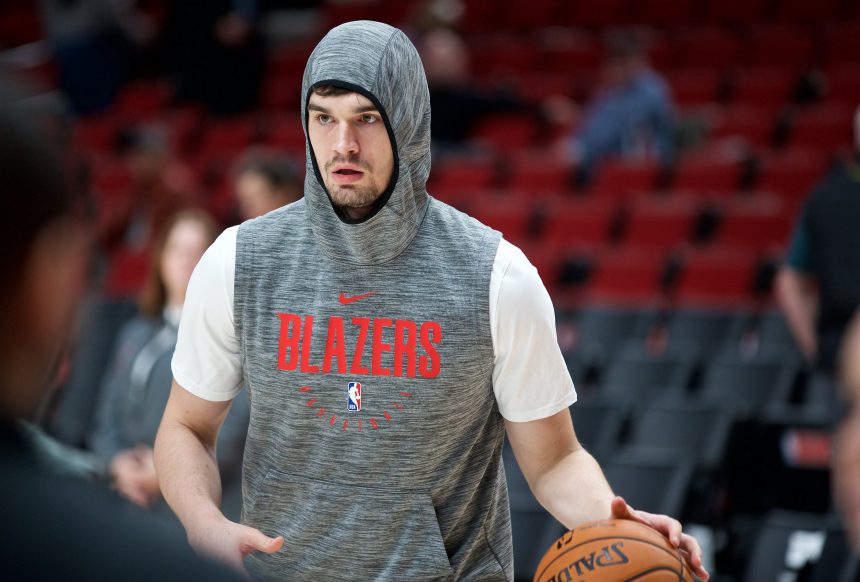
The Cleveland Cavaliers thought they had their answer on the wing. Two days after LeBron James chose Philadelphia, the front office agreed to terms with Mario Hezonja, the reigning MVP of Spain’s Liga ACB, on a one-year deal that gave the offseason a measure of direction.
As of Tuesday, that answer still is not official — and the reason sits 4,000 miles away in Madrid. Marc Stein reported Tuesday that Cleveland has yet to formally sign Hezonja, with one source close to the process telling The Stein Line the team is “working through” the steps required to finalize the deal.
Cleveland has yet to formally sign Mario Hezonja but is “working through" the needed steps, one source close to the process tells @TheSteinLine, to make the deal official.
Hezonja and the Cavaliers agreed to a one-year minimum deal Sunday after LeBron James chose Philadelphia. https://t.co/AuSbFB1Hrc pic.twitter.com/VOFYcVgV5f
— Marc Stein (@TheSteinLine) July 28, 2026
Hezonja and the Cavaliers reached their agreement Sunday, shortly after James made his decision, with agent Michael Tellem telling ESPN’s Shams Charania the contract is a one-year pact worth $2.8 million. The complication is not in Cleveland. It is Real Madrid, Hezonja’s club for the past four seasons, which has resisted letting the 31-year-old forward out of his European contract.
What Real Madrid is actually disputing
The dispute comes down to a calendar problem. Hezonja’s contract with Madrid contains an annual escape hatch for an NBA return, but that window closed July 20 this summer. Cleveland and Hezonja did not shake hands until July 26 — a six-day gap the Spanish club is now leaning on as grounds to contest his exit.
There is a second layer, first surfaced by Marca and relayed by Eurohoops: Under Spanish league rules, triggering the clause reportedly required Hezonja to deliver notice and the buyout payment at the same time. Hezonja told Madrid before the deadline that he intended to leave, per that reporting, but at that point he had no NBA offer in hand and had not completed the payment.
His camp has reportedly since offered to increase the buyout figure to close the matter, per Marca. None of this appears to have shaken Hezonja’s own commitment to the move.
BasketNews reporter Donatas Urbonas has reported that his out clause recurs every offseason through 2029, and that the forward was confident enough in an NBA future to decline conditional fallback deals from three EuroLeague clubs. He is not hedging. The question is whether Madrid can make him wait.
How the LeBron wait created the problem
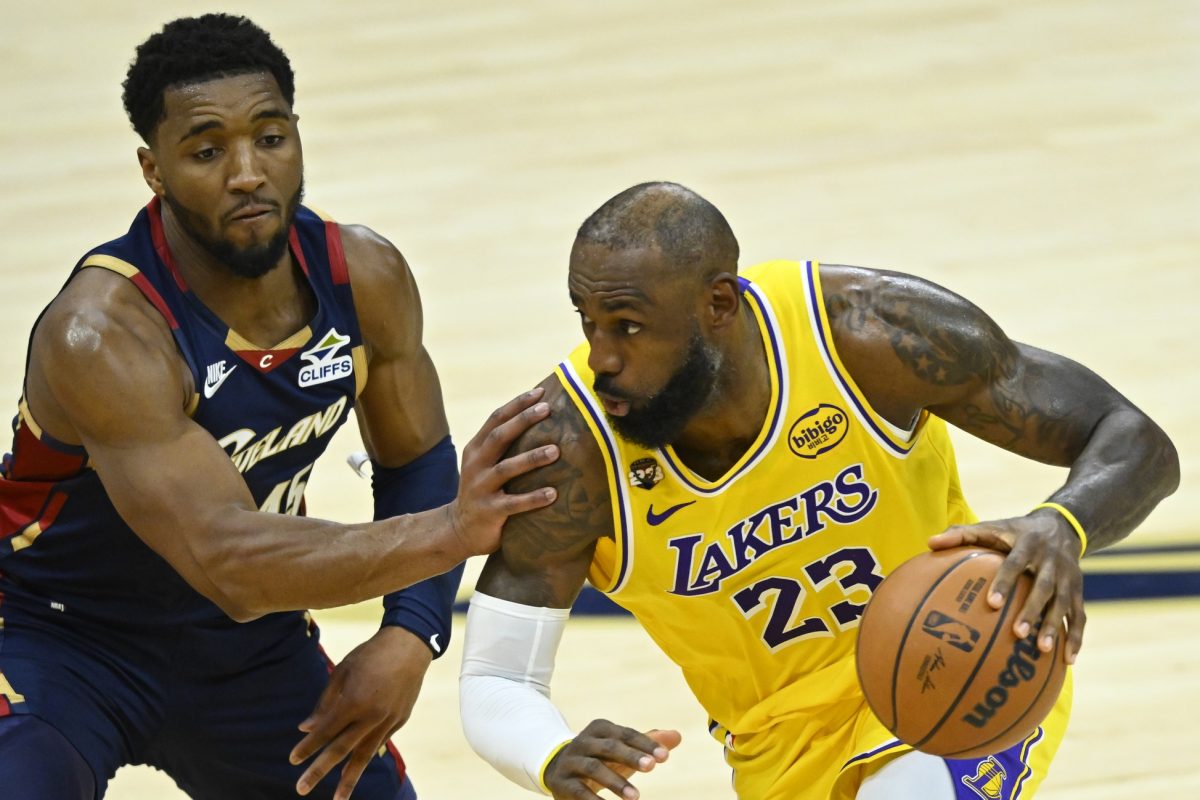
Here is the part nobody in Cleveland wants to say out loud: The six-day gap exists because of the James sweepstakes.
Hezonja’s NBA market was never independent of the LeBron chase. When Stein and Jake Fischer first connected the Cavaliers to Hezonja on July 22, the reporting was explicit that Cleveland’s interest was contingent — a fallback that would activate only if James went elsewhere, as covered here at the time.
The teams pursuing Hezonja were largely the same teams pursuing James, and none of them was going to commit a roster spot and minimum money to a European forward while a 41-year-old franchise-altering free agent was still on the board. So Hezonja waited.
His clause expired July 20 while the entire league sat frozen, James signed with the Sixers on July 24 and the Cavaliers moved on Hezonja within 48 hours. The sequencing was rational for every NBA team involved, and it left the player himself exposed on the wrong side of a contractual deadline.
The same holding pattern that cost Cleveland its superstar pursuit is now complicating its consolation prize.
Why Cleveland can’t shrug this off
If Madrid were disputing the exit of a 15th man, this would be a curiosity. Hezonja is not that for this roster.
Cleveland’s books leave almost nothing to work with. The Cavaliers carry 13 guaranteed contracts and sit roughly $25.3 million below the first apron, with the payroll dominated by Donovan Mitchell’s extension, Evan Mobley, Jarrett Allen and the new James Harden deal — leaving minimum-level contracts as the primary avenue for outside additions.
Hezonja at $2.8 million was precisely the kind of addition this roster construction allows, and he was arguably the best available fit for it. The fit is real. Basketball-Reference lists Hezonja at 6-foot-8 and 220 pounds, a forward who logged 330 NBA games for Orlando, New York and Portland before his last league appearance in 2019-20.
The player Madrid is fighting to keep bears little resemblance to the one who left: Hezonja averaged 17.5 points and 4.9 rebounds per game in ACB play last season, on his way to the Spanish league’s MVP award. A team that just watched the Knicks sweep it out of the Eastern Conference finals needed exactly that archetype — a big wing with self-generated offense — and needed it at exactly that price.
Lose the signing, and Cleveland does not get to run it back. The minimum-market forwards worth having are coming off the board daily.
The rest of the fallback board
The Cavaliers, to their credit, have not treated Hezonja as the whole plan.
“I’m told Miami, Denver, and Cleveland are among the teams interested in DeMar DeRozan,” Charania said Monday on ESPN’s “NBA Today.”
DeRozan, who turns 37 in August, averaged 18.4 points, 4.1 assists and 2.9 rebounds per game across 77 starts for Sacramento last season before the Kings waived him July 6 and would address the same bench-scoring void from a different angle.
The Jonathan Kuminga track also remains technically alive. Cleveland is still interested in a sign-and-trade for the Atlanta free agent, but the structure works against it: League rules require a sign-and-trade contract to run three years, and Kuminga has been willing to lower his asking price only on a one-year deal.
Charania has identified the Cavaliers and Lakers as the primary suitors. As examined Sunday, the Hezonja agreement itself was widely read as Cleveland stepping off the Kuminga path — which is exactly why the agreement falling apart would scramble the board again.
Neither option replaces what Hezonja was signed to be. DeRozan is a midrange scorer without positional size, and Kuminga requires a trade mechanism the player himself has resisted.
Hezonja was the clean answer, which is why the standoff matters.
Where this likely ends
The honest reading of the available reporting is that this is a financial dispute, not a dead deal. The “working through” language from a source close to the process suggests procedural cleanup rather than collapse, and buyout standoffs between NBA-bound players and European clubs have historically ended with a bigger check, not a canceled move.
Hezonja’s camp reportedly offering more money points the same direction. But it is worth being precise about what has and has not happened.
There is no signed NBA contract, no Real Madrid statement clearing his exit and no reported resolution to the payment question. Until those exist, Cleveland’s most important offseason addition remains an agreement in principle with a European club holding leverage over it — and after this month, Cavaliers fans can be forgiven for wanting to see the ink.