

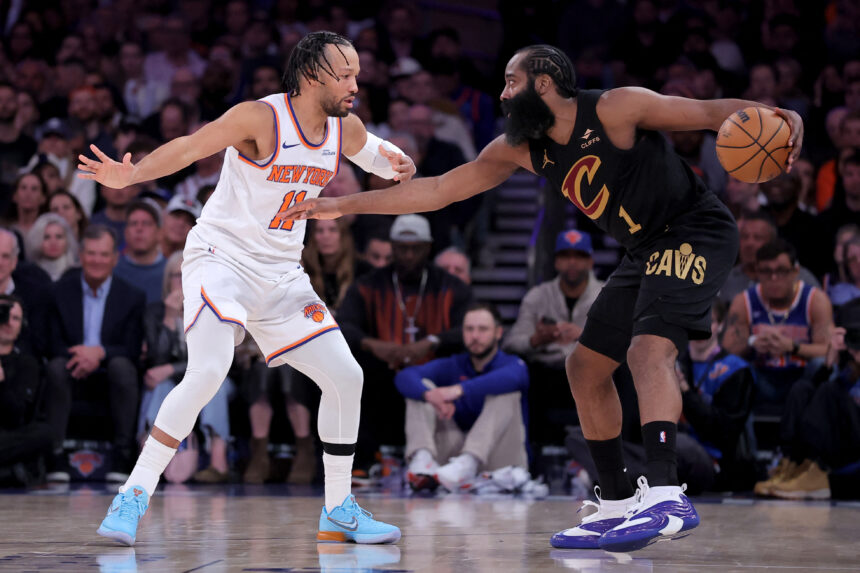
James Harden wants his Cleveland Cavaliers role judged by more than his scoring total, even after a night when his points made a major difference.
Following Wednesday’s 115-107 win over the New York Knicks, Harden discussed the challenge of contributing alongside Donovan Mitchell while adjusting how he influences the offense.
He said that broader responsibility can get lost in the discussion of his production.
“It’s my 18th year, so my name is James Harden, and I used to score a lot of points. Now it’s like, all right, cool,” Harden said. “Still score points, but try to find out other ways to impact the game as well. And I think that’s what people probably don’t understand.”
Harden also described the process of learning his teammates and adapting his approach as his physical abilities change. His explanation puts the question beyond whether he can still produce a big scoring night: Cleveland needs him to recognize when to attack and when to create an opportunity for someone else.
The timing gave those comments weight. The Cavs were coming off a loss in Charlotte that prompted Kenny Atkinson to question their effort. Wednesday provided a better result, along with a clearer example of how Harden and Mitchell can share the offense.
Donovan Mitchell explains how the Cavs shared the offense
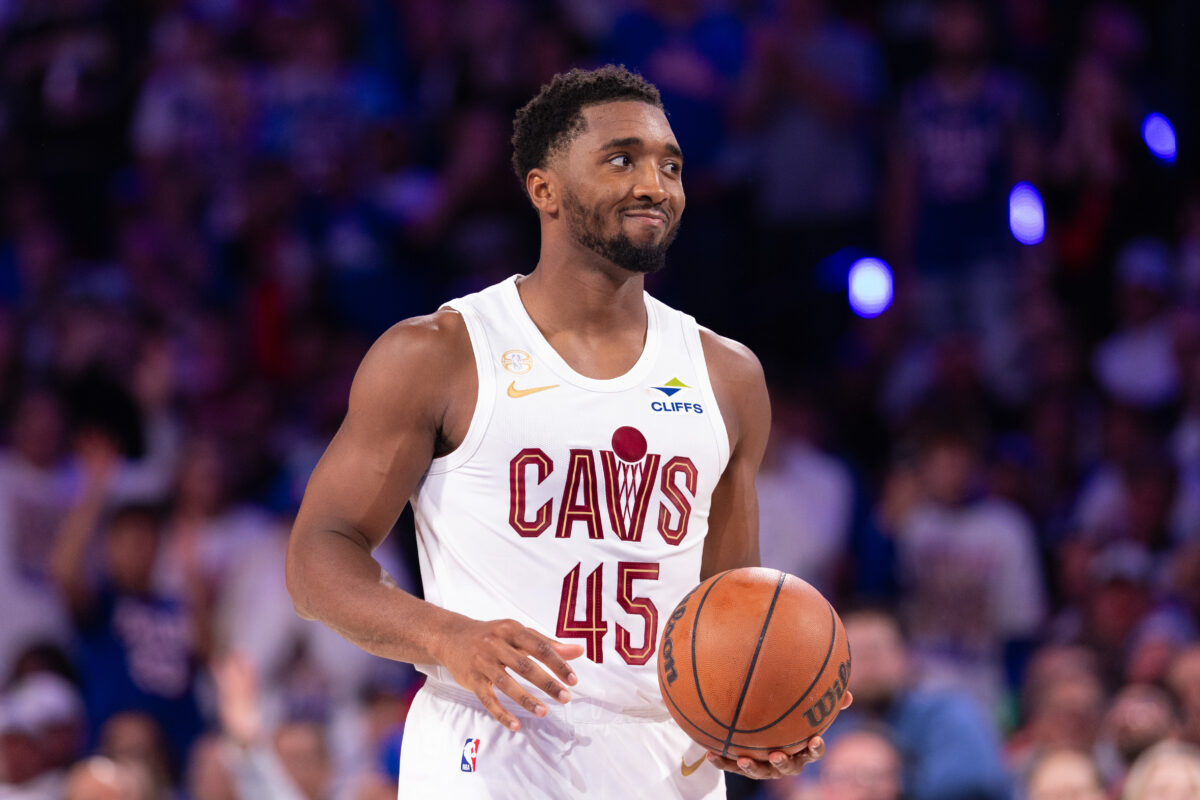
Harden and Mitchell combined for 55 points. Their individual shooting lines illustrate how much production Cleveland received without either guard needing an unusually large number of attempts.
| Player | Points | Field goals | 3-pointers | Assists |
|---|---|---|---|---|
| James Harden | 32 | 9-for-14 | 5-for-7 | 4 |
| Donovan Mitchell | 23 | 8-for-15 | 2-for-7 | 6 |
Those totals came with help elsewhere. Jarrett Allen finished with 11 points and 14 rebounds, while Tyrese Proctor and Meleek Thomas supplied 15 and 14 points, respectively. Cleveland improved to 6-6.
Mitchell offered a specific explanation of how the backcourt operated. He described New York sending extra defensive attention toward him and leaving Harden with one defender.
“I think he’s starting to get his footing and figuring things out, and whatnot,” Mitchell said. “It always helps when he’s scoring 30.”
Mitchell said he was willing to move the ball and give Harden space to work, describing a partnership in which the responsibility can change depending on the possession. That account helps explain why a productive night for one guard does not require the other to dominate the ball.
The basketball implication is straightforward: When two defenders commit to Mitchell, Cleveland has an opportunity elsewhere. Harden can attack that opening, but if the next defender rotates toward him, the useful response may be another pass.
The objective is to preserve the advantage rather than force a predetermined player to finish the possession.
Kenny Atkinson sets expectations for James Harden
Atkinson’s assessment pointed toward the same flexibility. The coach emphasized Harden’s decision-making and said Cleveland has other scoring options.
“So, it’s not Houston James where we need that every night. We got enough other weapons,” Atkinson said.
The coach also acknowledged that Cleveland’s offense still needs work as players settle into the lineup and rotation. That qualification matters: A successful game can illustrate a useful approach without establishing that the team will execute it consistently.
For Harden, contributing beyond scoring should not mean passing up a favorable matchup. For Mitchell, moving the ball against extra pressure can be productive even when it reduces the number of possessions he finishes himself. Their accounts of Wednesday’s game describe those responsibilities working together.
Cleveland now has a concrete performance to build on. The next test is whether the guards can keep making those reads when shots are harder to convert and opponents change their coverage.