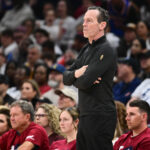
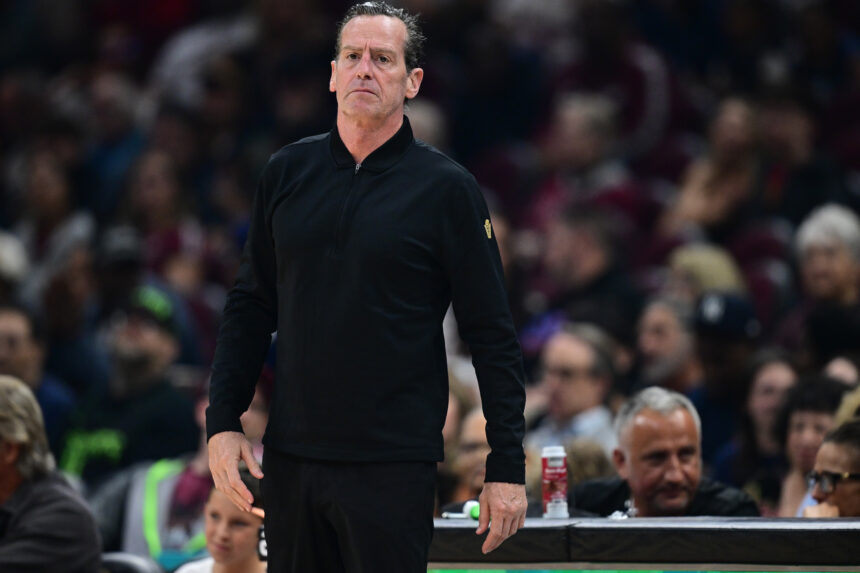
Kenny Atkinson had a specific concern after the Cleveland Cavaliers’ first preseason game: too many Boston misses became another opportunity for the Celtics.
Boston collected 21 offensive rebounds in Thursday’s 124-113 win at Rocket Arena. Cleveland finished with six, leaving Atkinson with an immediate issue to address as the Cavs prepare for the regular season.
“Rebounding is a concern coming into the season,” Atkinson said. “We’ve got to do better.”
The cost went beyond the rebounding column. Boston finished with a 27-8 advantage in second-chance points, and most of that damage occurred before halftime, while Cleveland’s starters were still part of the rotation.
That gives the Cavs something concrete to examine without treating one exhibition as a forecast for their season. The final margin came from several factors, but Cleveland repeatedly allowed Boston to keep attacking after the first shot failed.
Boston’s second-chance points show the cost
The NBA’s official game book shows how Cleveland lost despite shooting more accurately from the field and committing fewer turnovers.
The Cavs shot 47.8 percent to Boston’s 41.4 percent and finished with 11 turnovers to the Celtics’ 16. Cleveland also held a 62-42 advantage in points in the paint.
Those were meaningful advantages, but the Celtics supplemented their offense with repeated opportunities off the glass.
| Statistic | Celtics | Cavaliers |
|---|---|---|
| Total rebounds | 56 | 39 |
| Offensive rebounds | 21 | 6 |
| Second-chance points | 27 | 8 |
| First-half second-chance points | 22 | 6 |
| Field-goal attempts | 99 | 92 |
Boston’s 19-point edge in second-chance scoring exceeded the 11-point final margin. That does not mean Cleveland would have won by eliminating those points; changing a possession changes what follows.
It does identify a substantial source of offense the Cavs could not prevent. The offensive-rebound difference also should not be described as 15 additional possessions.
An offensive rebound extends an existing possession, and more than one can occur during the same trip. Boston finished with seven more field-goal attempts, not 15.
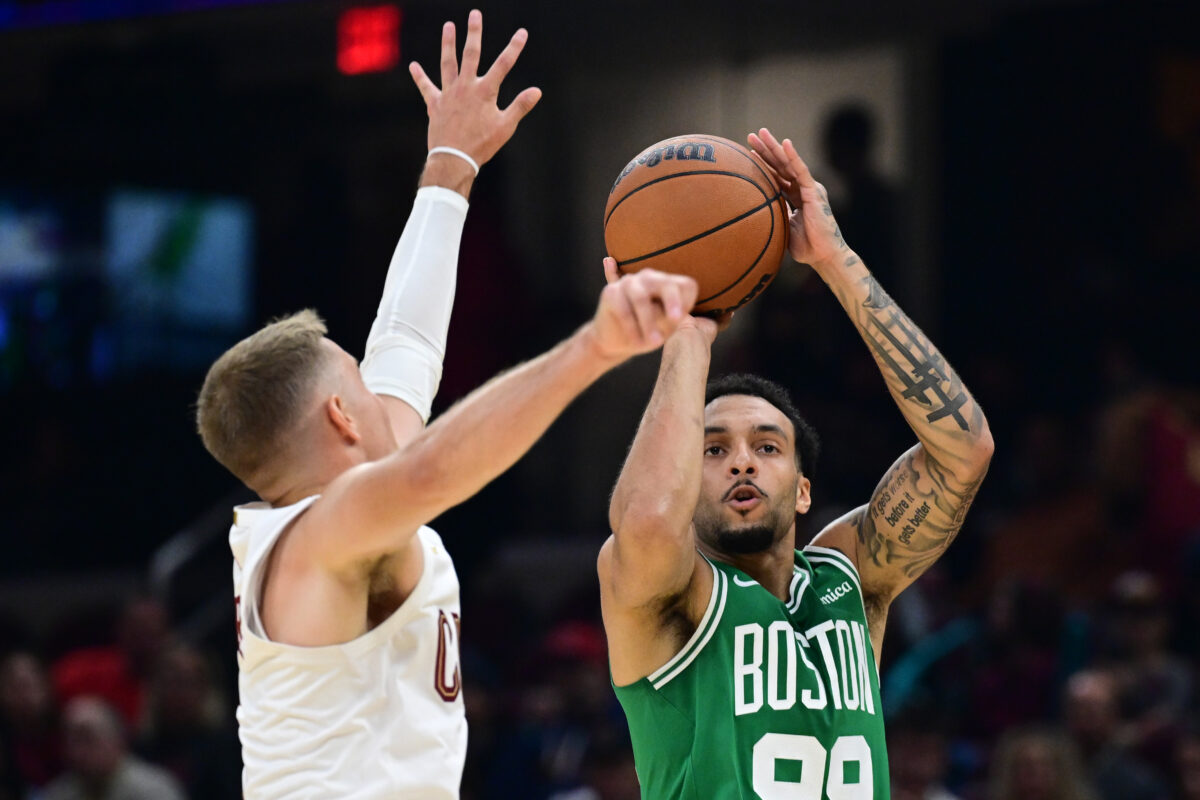
Luka Garza, Chris Cenac Jr. and Dillon Mitchell each collected four offensive rebounds. Together, those three accounted for 12, twice Cleveland’s team total.
The challenge extended beyond keeping one Celtics player away from the basket.
The problem appeared before Cleveland emptied its bench
The first quarter offered the clearest warning. Boston grabbed 10 offensive rebounds in the opening 12 minutes, matching Cleveland’s total rebounds for the period.
The Celtics scored 13 second-chance points and led 32-29 despite shooting 12-of-31 from the field. By halftime, Boston had 12 offensive rebounds and a 22-6 second-chance scoring advantage.
Cleveland trailed 71-62. The Celtics therefore generated 22 of their eventual 27 second-chance points before the second-half experimentation began.
Both teams made 24 field goals in the first half, but Boston attempted 56 shots to Cleveland’s 43. The Cavs shot 55.8 percent before the break and still trailed by nine.
Their efficiency was not enough to overcome Boston’s additional attempts, 3-pointers and free throws. Donovan Mitchell, Jaylon Tyson, Peyton Watson, Evan Mobley and Jarrett Allen started for Cleveland.
Each played roughly 17 minutes, all in the first half. Atkinson had said before the game that the starters would sit after halftime.
That context limits what the full-game result can establish about the regular rotation. It also prevents the early rebounding trouble from being dismissed as something that happened only after the starters finished playing.
There is a distinction between those conclusions. The first-half totals include bench minutes, so they cannot all be assigned to the starting five.
They do show that the issue was present during the portion of the game in which Cleveland used its leading players.
Garza had 16 points and seven rebounds at the break, including four offensive boards. Allen and Mobley finished their nights with four rebounds and one rebound, respectively.
Those short appearances do not establish a season-long trend, but they help explain why Atkinson singled out the glass immediately afterward.
Sam Merrill’s defensive message puts the focus on all five players
The rebounding concern intersects with a broader objective Cleveland has discussed during camp. Sam Merrill described the defensive standard the team wants to reach.
“We definitely want to get back to being a top-five defense,” Merrill said.
Merrill also explained that Cleveland had sometimes required too much help from Mobley and Allen after perimeter defenders allowed penetration. He identified improved containment and shot selection for opponents as parts of the solution.
The tactical connection to rebounding is straightforward: when a big man leaves his assignment to challenge a drive, another defender may need to account for the player he leaves behind. Forcing a difficult shot does not finish that job if the opponent retrieves the miss.
That is an explanation of the responsibility, rather than a claim that every Boston offensive rebound came from the same breakdown. The game book records results; it does not identify who missed a box-out or whether a coverage assignment was misunderstood.
Those distinctions matter for the coaching response. A missed rotation, an uncontested crash from the perimeter and a rebound lost in traffic require different corrections.
Calling all three an effort problem would provide less useful information than identifying the assignment that failed.
Atkinson’s earlier comments about improving Cleveland’s preparation give that work additional context. The preseason provides an opportunity to address specific situations before the consequences extend beyond an exhibition.
Cleveland’s promising wings still have defensive work to do
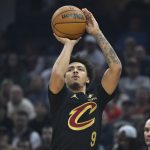
There were productive individual performances in the loss. Tyson led Cleveland with 14 points on 6-of-8 shooting, while Watson contributed seven points, four rebounds, four assists and two blocks.
Their offensive contributions did not remove the defensive demands. Atkinson praised Tyson’s understanding of the offense while identifying another area to improve.
“I still want him to guard better,” Atkinson said.
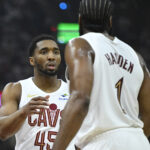
James Harden missed the game because of ankle soreness and that Atkinson characterized the decision as precautionary. Cleveland consequently has more to learn about how its combinations function with Harden available.
For the wing group, the relevant test is whether its size and mobility translate into complete defensive possessions. Blocks and disruptive contests can help, but recovering the ball afterward determines whether Cleveland can move into its own offense.
That is part of the work behind Allen’s stated belief in Cleveland’s Eastern Conference potential. Thursday supplied a specific area where the execution needs to improve.
What the Cavs need to show against Orlando
Cleveland’s next preseason game is Sunday against Orlando at Rocket Arena. The most useful response would be fewer extended defensive trips when the regular rotation is playing.
That requires more context than simply comparing rebound totals between games. The number of available misses can change substantially, and different lineups can face different assignments.
Cleveland should be evaluating who makes contact with a rebounder, who covers for a teammate contesting the shot and whether the ball is secured after that work.
Thursday’s first-half second-chance deficit gives Atkinson a clear starting point. Before the Cavs can judge whether their defense is meeting its larger ambitions, they need to turn more of the misses they force into possessions of their own.